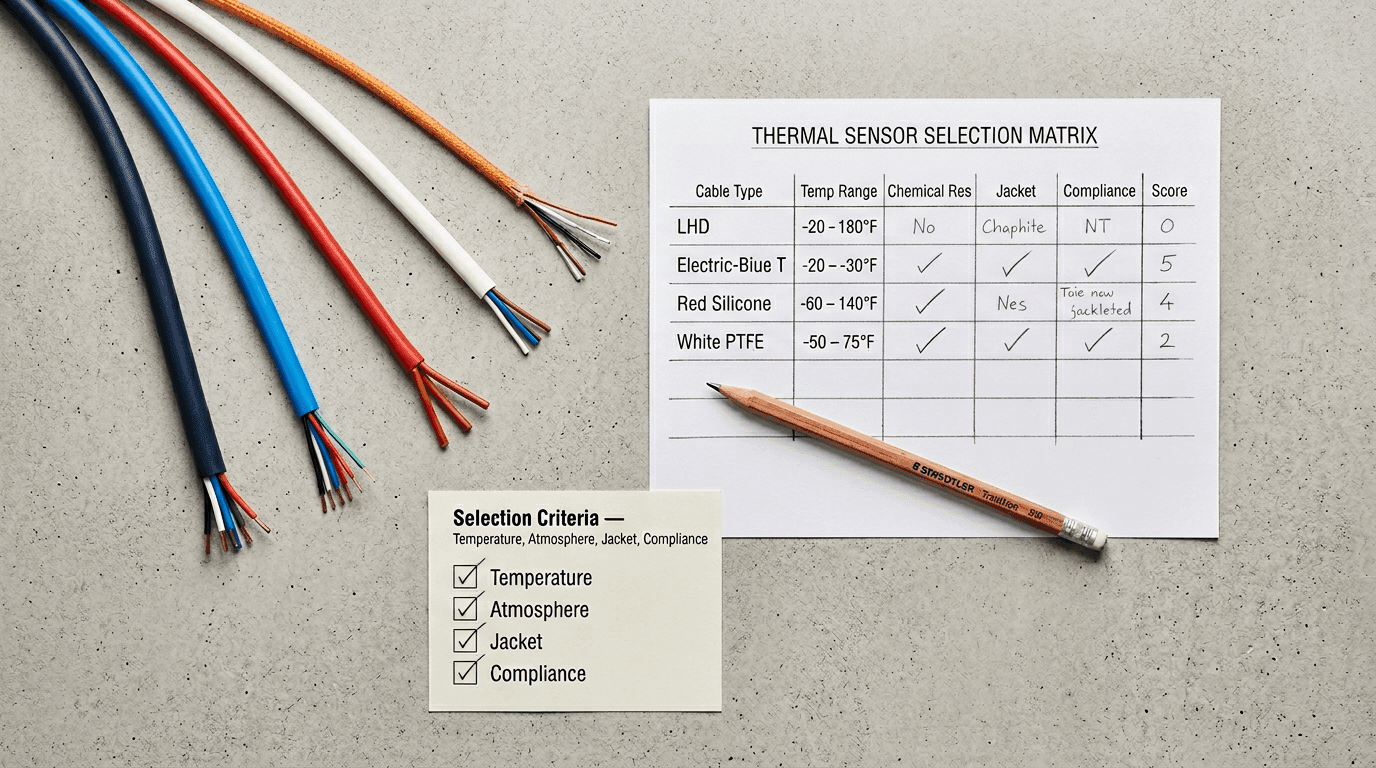
If you have ever seen an appliance-safety recall notice, you have probably also read the failure report. In our experience the failure path tends to be the same: the primary thermal sensor reported correctly, the firmware was supposed to act on it, and something in between broke. The product kept drawing current and something melted.
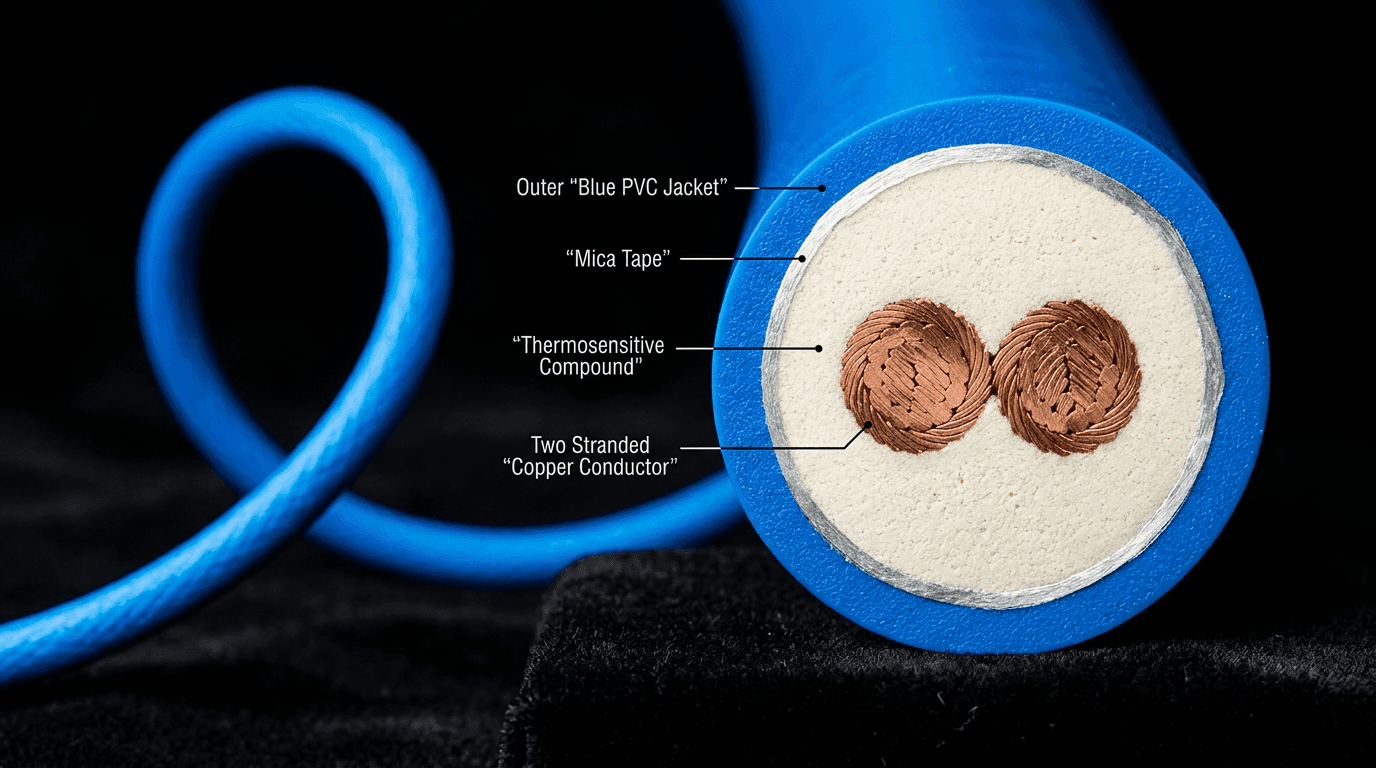
A thermosensitive cable in the cut-off path is the design answer to that failure mode. It does not replace the thermistor, the firmware or the fuse. It sits in series with them as a passive, physics-driven override — the last layer that works even when the software does not. The two architectures that sit behind that override — one-shot fusible vs resettable PTC — are unpacked in our one-shot vs resettable thermal cutoff cable decision tree; the layer-by-layer construction that makes the override possible is in inside a thermosensitive cable: anatomy and trigger physics.
Why a Thermistor Alone Is Not Enough
NTC thermistors are excellent at telling a microcontroller what temperature an enclosure is at. They are not excellent at turning power off. That requires the microcontroller to read correctly, decide correctly and drive a relay or MOSFET correctly — at exactly the moment something is already going wrong.
Thermal cut-off devices (thermal fuses, bimetal switches, thermosensitive cables) do not depend on a microcontroller. They sit in the cut-off path itself. Above a rated activation point the cable's thermosensitive insulation collapses, the conductors short (or in some topologies open), and the downstream power stage is forced into a safe state by the circuit — not by the firmware. How those three device families differ on coverage, reset behaviour and whether each breaks the circuit itself is compared in the thermal cutoff cable vs thermal fuse vs bimetallic thermostat note.
That is the reason safety-conscious appliance designs usually have at least one passive thermal element in series with the active-sensing loop. Belt plus braces.
Typical Points of Integration
Motor & Transformer Windings
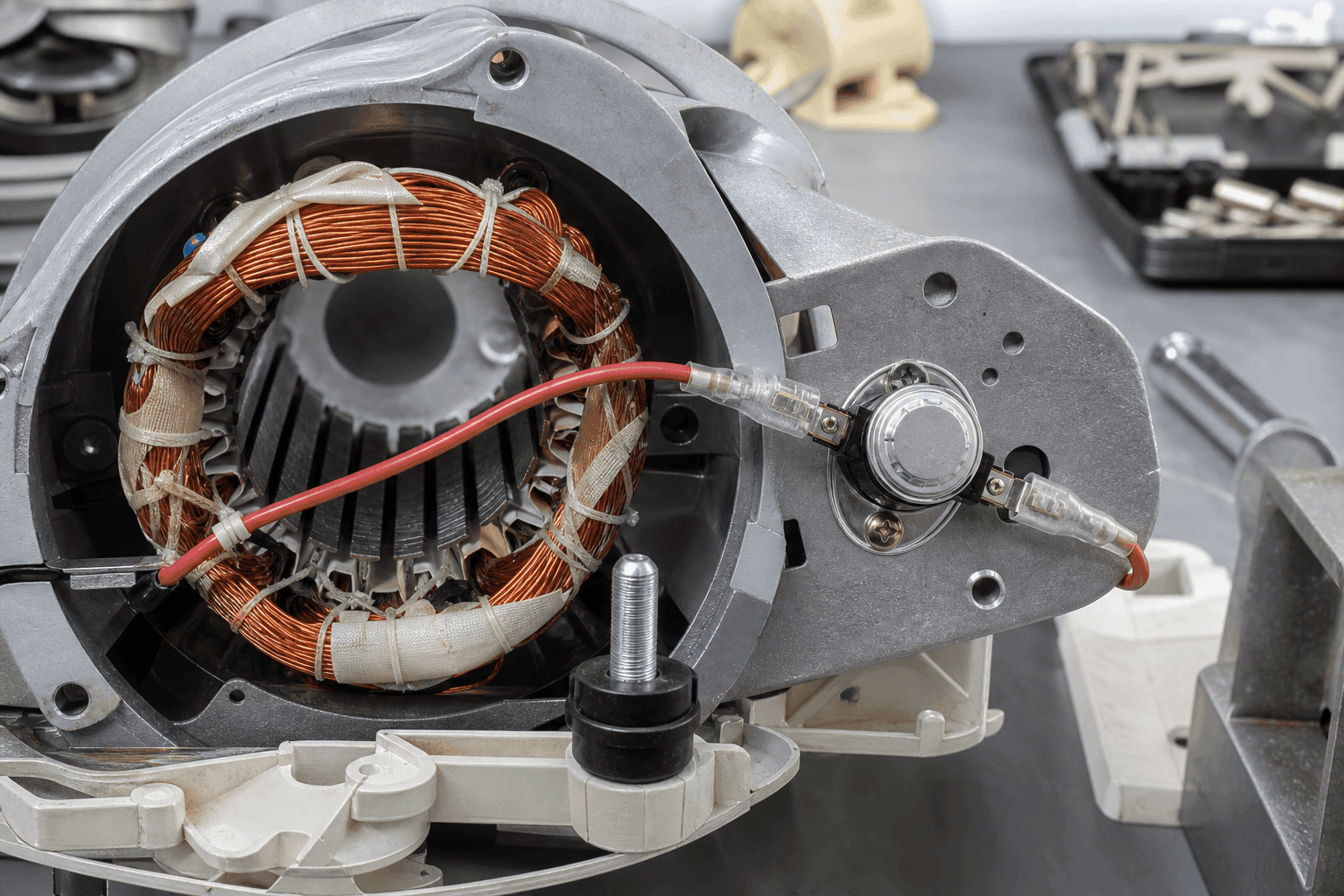
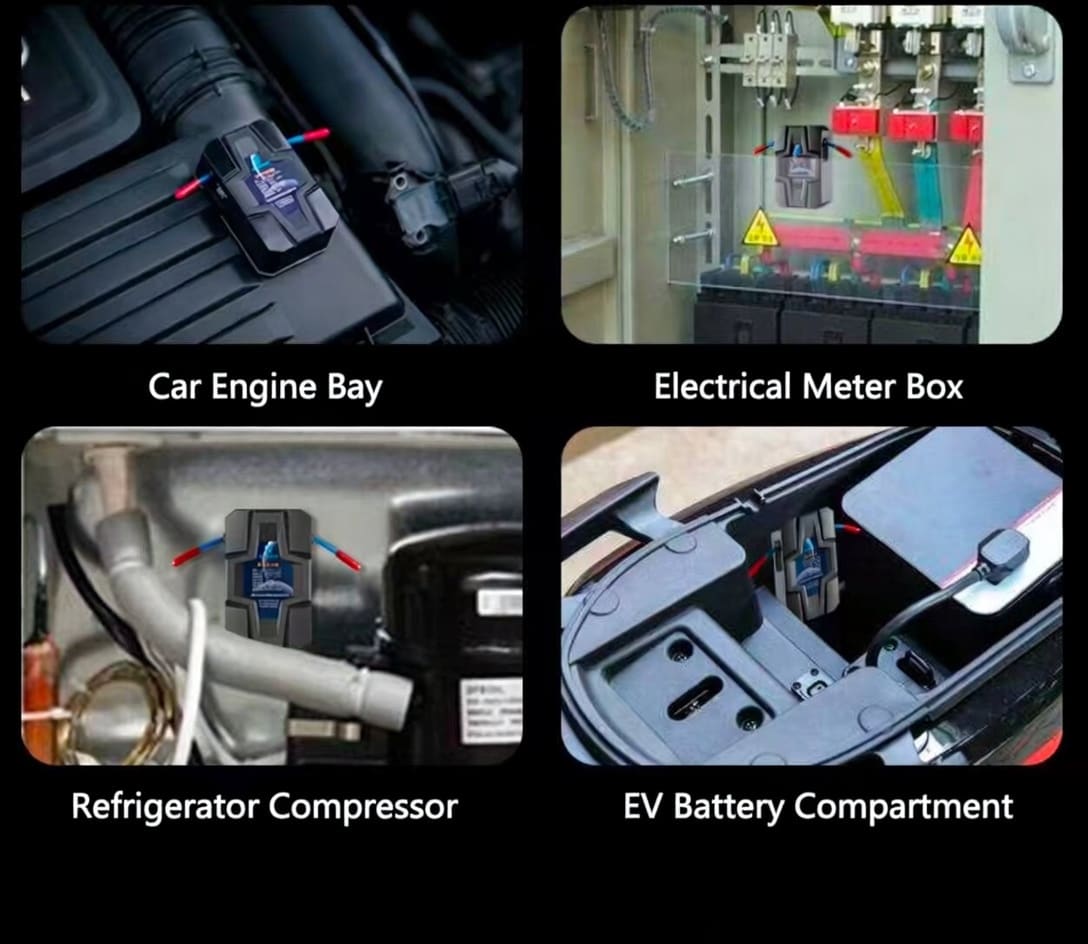
A short length of TS cable wound inside the stator slot or next to the transformer core senses the winding's actual temperature — not the enclosure temperature. Locked-rotor, blocked-airflow and brown-out conditions show up as a winding-temperature event long before they show up on an external thermistor.
Lithium Battery Packs
Between cells and around the busbar. TS cable is passive, so it does not introduce a new failure mode into the BMS; it just provides an independent second-channel cut-off in the rare event that the BMS IC loses authority over the main contactor.
Switched-Mode Power Adapters
Modern adapters run hot and dense. A TS cable routed past the main transformer and primary MOSFET gives you a deterministic cut-off if a cooling channel is blocked or the load stays pegged at maximum for too long. This is the cheapest kind of "adapter sanity check" you can build.
Compressor & HVAC Motors
Refrigerator and air-conditioner compressors experience refrigerant-leak events that the control board cannot predict. A TS cable bonded to the compressor shell provides an independent shutdown that does not care whether the main electronics are still running.
Display & Backlight Power Stages
Large TV backlight arrays and high-brightness display power boards integrate TS cable near the LED driver and the step-up converter — the places where component faults tend to produce local hot spots rather than uniform heating.
OEM-Grade TS Cable — What Actually Matters
When we qualify a TS cable for an OEM line, six properties dominate the conversation:
- Activation repeatability. Not just the nominal setpoint — the spread across a production lot. A tight distribution (say ±5°C) is worth more than a pretty nominal number.
- Geometric envelope. Diameter, minimum bend radius, crush, pull and cut-length tolerance. Tight enclosures are where good specs turn into good products — the mechanical envelope is the spec most likely to fail a housing the electrical spec passed. Whether those pieces arrive on a spool or cut to length is a separate OEM logistics call.
- Dielectric behaviour. Insulation resistance and breakdown voltage under the appliance's actual working conditions — not just at 25°C.
- Long-duty stability. Some thermosensitive compounds drift under years of continuous sub-activation heat. Supplier should show you a drift curve, not just a one-shot trip test.
- Compliance paperwork. RoHS, REACH, UL-grade compound where required. This is about market access, not marketing.
- Traceability. Per-batch inspection report with the activation-point sample pull and the lot number printed on the jacket.
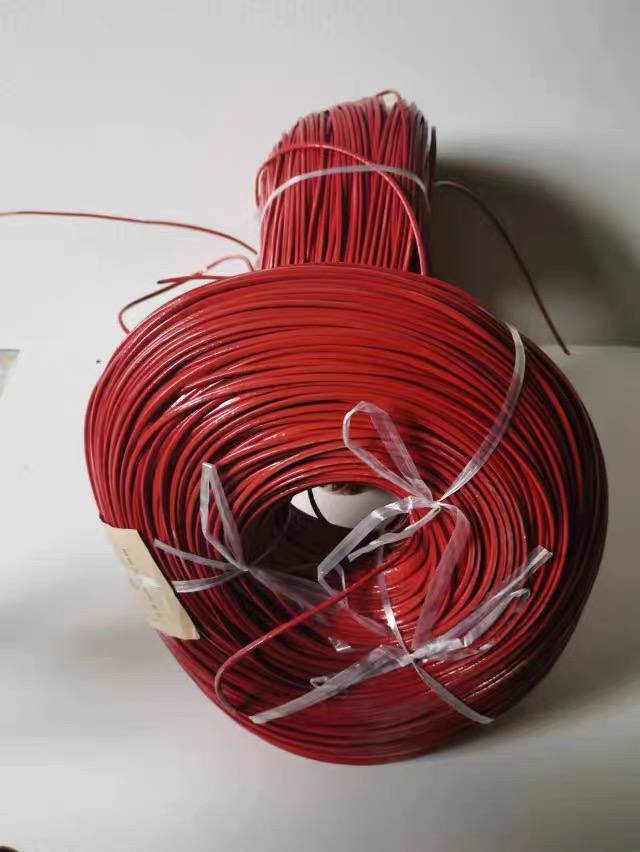
Integration Rules That Actually Matter
- Thermally bond, do not just locate. A cable "near" a heat source responds too slowly. Thermal paste, clip, or direct contact to the monitored surface makes the difference. Activation time depends on insulation and wall thickness — see our note on engineering the response time of a thermosensitive cable for the property table behind that.
- Keep it out of the airflow path. Forced air can hold the cable below its activation point even when the protected component is already in trouble.
- Size the enclosure cut-out first, the cable second. A 3 mm cable routed through a 2 mm gap never trips the way you designed for.
- Qualify under real load. Activation temperature and activation time are not the same thing. Run a full thermal simulation and a destructive test before signing off.
- File the drawing with the activation code. Years later, someone in service has to know which TS grade is in the product.
Before any of these integration rules are applied, the supplier behind the cable has to clear a separate audit — six factory-floor signals we use to qualify a manufacturer for OEM lines, documented in qualifying a thermal sensor cable supplier — six factory signals you can verify.
A thermosensitive cable does not make an appliance "safe". It makes an appliance fail in a deterministic, inexpensive way when something else has already gone wrong. That is exactly why it belongs in the bill of materials.
Closing Thought
Over-temperature protection is not a feature you sell the end user. It is a design decision that reduces the probability that the end user ever has to think about safety at all. Get it right and nobody notices; get it wrong and it becomes the only thing they remember. The choice one level above this appliance context — whether an application needs a trigger element like a thermosensitive cable at all, rather than a measurement sensor such as an NTC thermistor or a thermocouple — is the cross-context decision in thermal sensor cable vs NTC thermistor vs thermocouple. Once the cable is in the cut-off path, how tightly that trip has to land — and what a tight band costs to specify and verify — is the subject of the custom activation tolerance note.
If your team is evaluating a TS cable for a new appliance programme — or requalifying an existing supplier — our engineering desk will review your thermal simulation and reply with an activation-point recommendation, a drift-curve data pack and an evaluation sample (subject to sample availability and project review).
FAQ — TS Cable in Appliance Design
Why use a thermosensitive cable in an appliance instead of a thermistor?
A thermistor and a thermosensitive cable solve different problems. A thermistor reports temperature to firmware that decides what to do next — accuracy is high, but the safety chain depends on a working MCU, working firmware and intact wiring. A thermosensitive cable is the trigger element itself: when the rated activation point is crossed, the cable shorts and the cut-off path opens regardless of firmware state. OEMs put the cable in the cut-off path so an over-temperature event still trips the appliance even if the controller is hung, the firmware is corrupted or a thermistor wire has come loose.
Which appliances most commonly use thermosensitive cable for safety?
The most common deployments are in motor windings (washing machines, range hoods, air-conditioner blowers), transformer cores, refrigerator and freezer compressors, induction-cooker coils, TV and PC power-board hot zones, EV battery packs and BMS modules, e-bike battery enclosures, power adapters, and small appliance over-temperature cut-off — anywhere a single localised hot spot can ignite insulation or damage a cell before firmware can intervene.
What activation point should I specify for an appliance thermosensitive cable?
Set the activation point above the highest legitimate operating temperature of the surrounding insulation system, with a safety margin that prevents nuisance tripping. For Class B insulation systems, 105–130 °C is typical; for Class F, 145–155 °C; for Class H or motor windings, 165–180 °C. Tolerance band matters as much as the nominal number — a cable that activates within ±15 °C of the rated value can nuisance-trip on a hot summer day when the headroom is tight. A tighter band (±5 K) costs more and narrows the supplier list, but it cuts the nuisance trips that come from activation-point scatter; how tight is realistic depends on the compound, the class and the factory.
What should I verify when qualifying an OEM thermosensitive cable supplier?
At minimum: per-batch activation-point test reports keyed to the lot number on the jacket; a documented tolerance band on activation (for example ±5 K, ±10 K or ±15 K) and the cost to tighten it; RoHS, CE and where required UL-grade compound; jacket compatibility with the polymer chemistry of your enclosure; and an engineering desk that can match formulation to your thermal envelope rather than rounding you to a stock SKU. A factory that cannot supply per-batch reports is a trading desk — buy only when MOQs and timelines force it.