A thermosensitive cable looks like a length of insulated wire. The physics hiding under the jacket is anything but ordinary. This note walks through the cable's anatomy the same way we walk a new engineer through it on their first day in the factory — conductor, compound, jacket, trigger — and explains why each choice has to be deliberate.
The Four-Layer Architecture
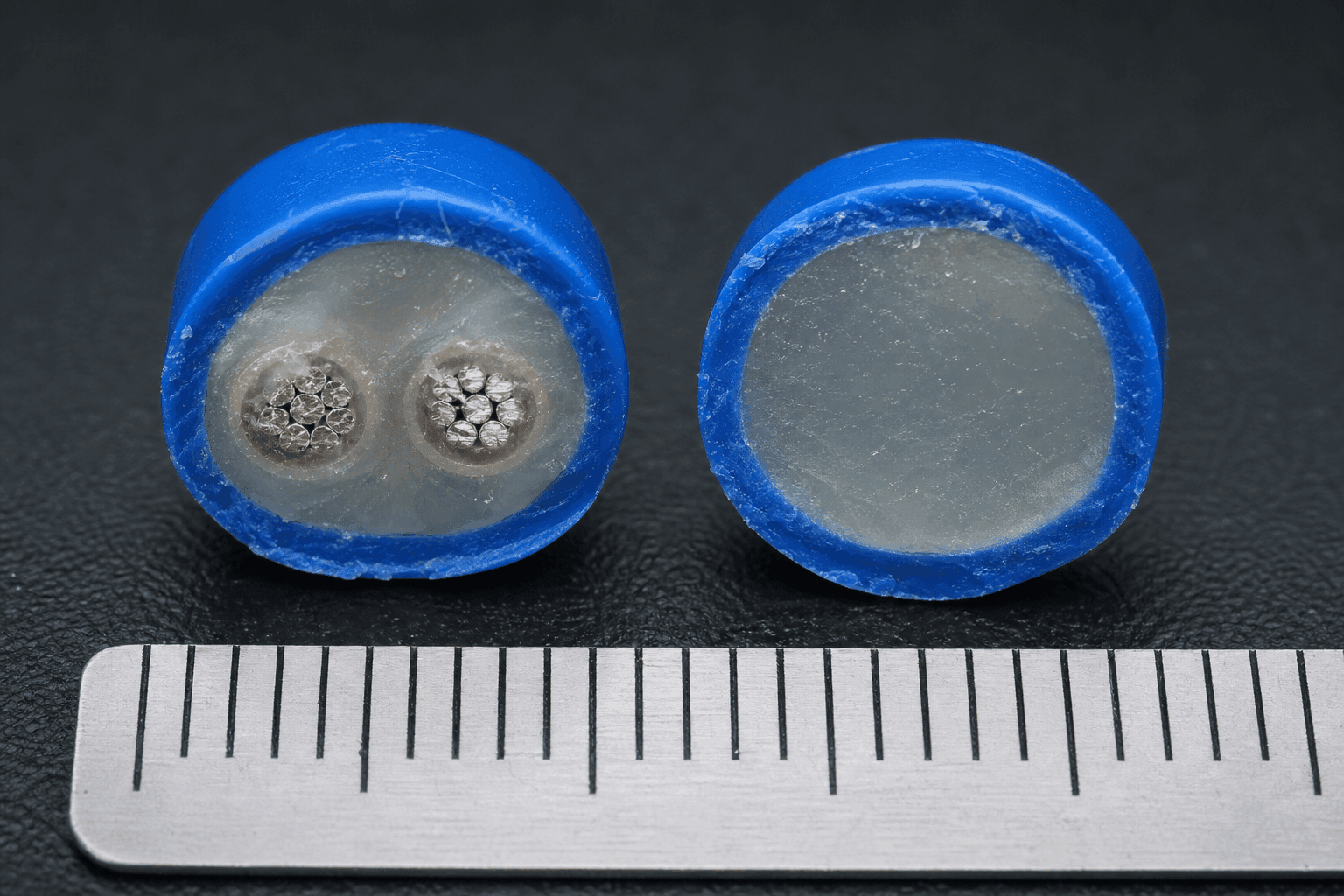
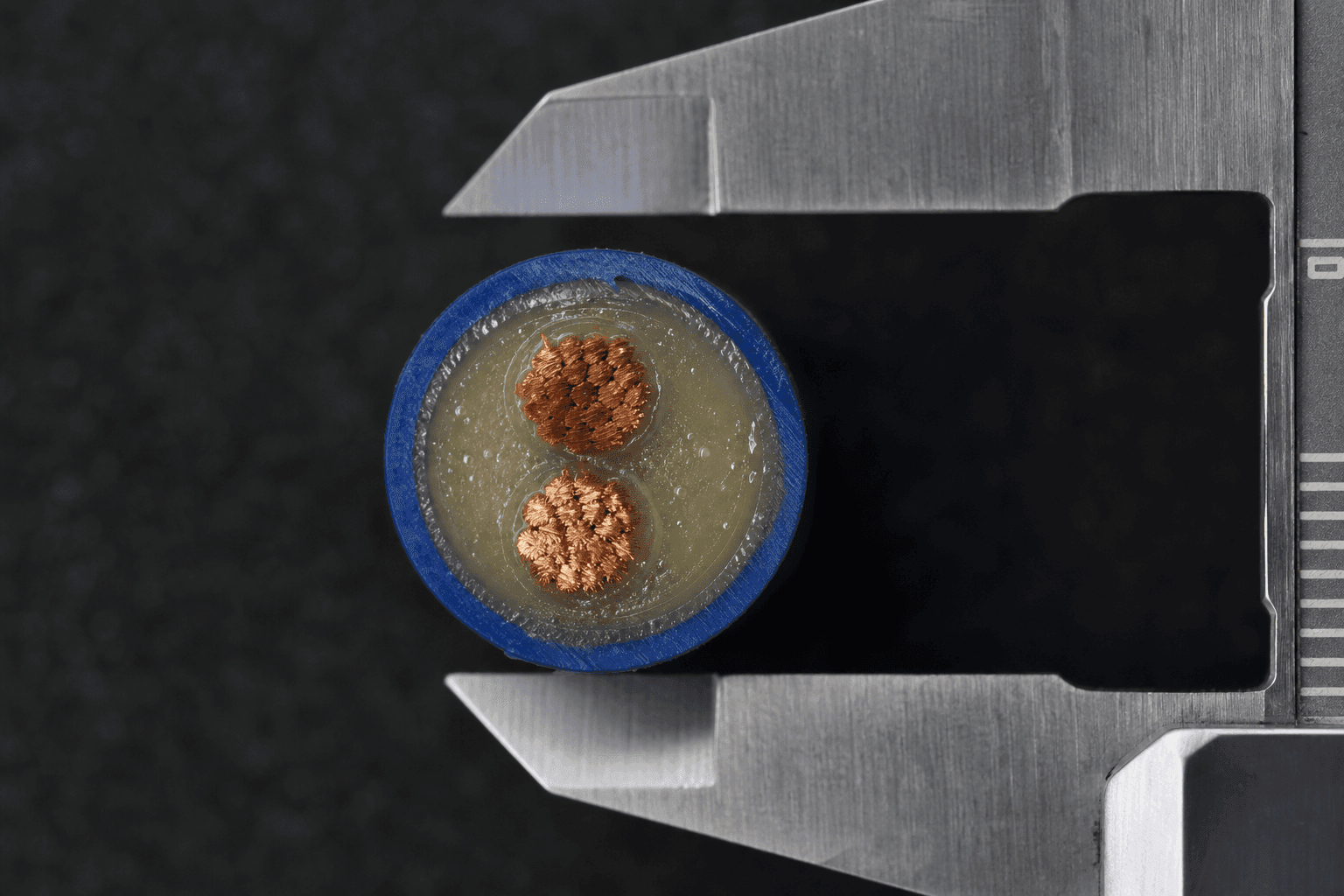
The standard metal-conductor thermosensitive cable we build is a stack of four functional layers, concentric around the cable axis:
- Conductors. Two (sometimes more) drawn metal strands twisted on a calibrated lay-length. Typically tinned copper or nickel-copper alloy to hold contact resistance stable over years of sub-activation heat exposure.
- Thermosensitive compound. The functional layer. A proprietary polymer formulation that remains a stable dielectric below the rated activation point and collapses — predictably, repeatably, at a calibrated temperature — above it.
- Structural insulation. A thin mechanical buffer that keeps the cable geometry stable in service but does not carry the activation behaviour itself.
- Outer jacket. The colored protective skin (blue for LHD, red for TS, or customer-matched). Carries the mechanical, chemical, UV and waterproof duties.
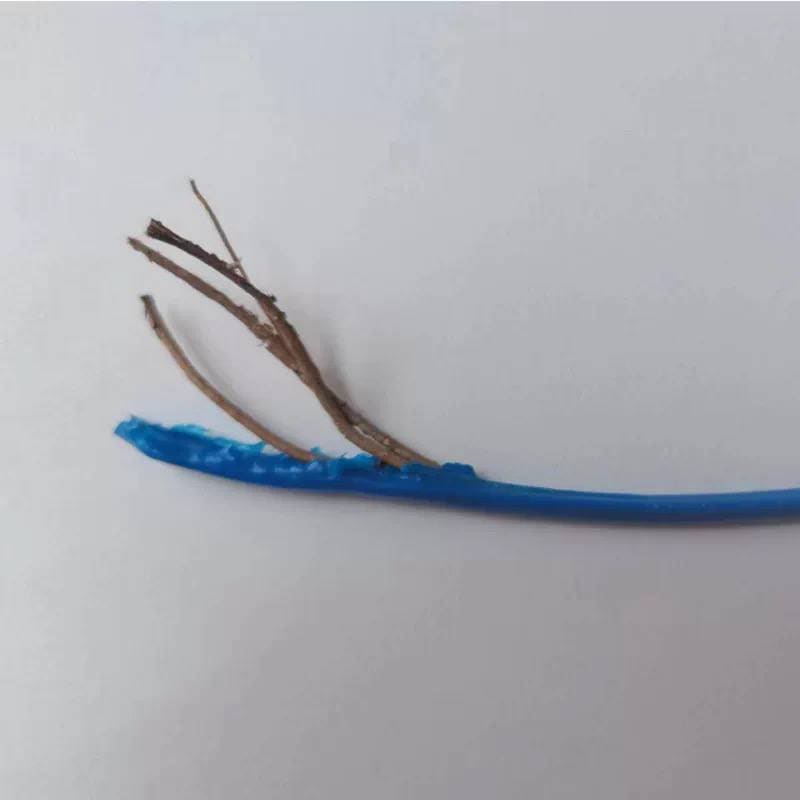
Two Core Architectures — When to Specify Which
Metal-Conductor Core (the workhorse)
Two parallel or twisted metal conductors, separated by the thermosensitive compound. Under normal conditions, the compound is a stable dielectric — the conductors cannot see each other. At the activation point, the compound collapses and the conductors short. The panel sees a clean dry-contact event.
Pick this architecture for:
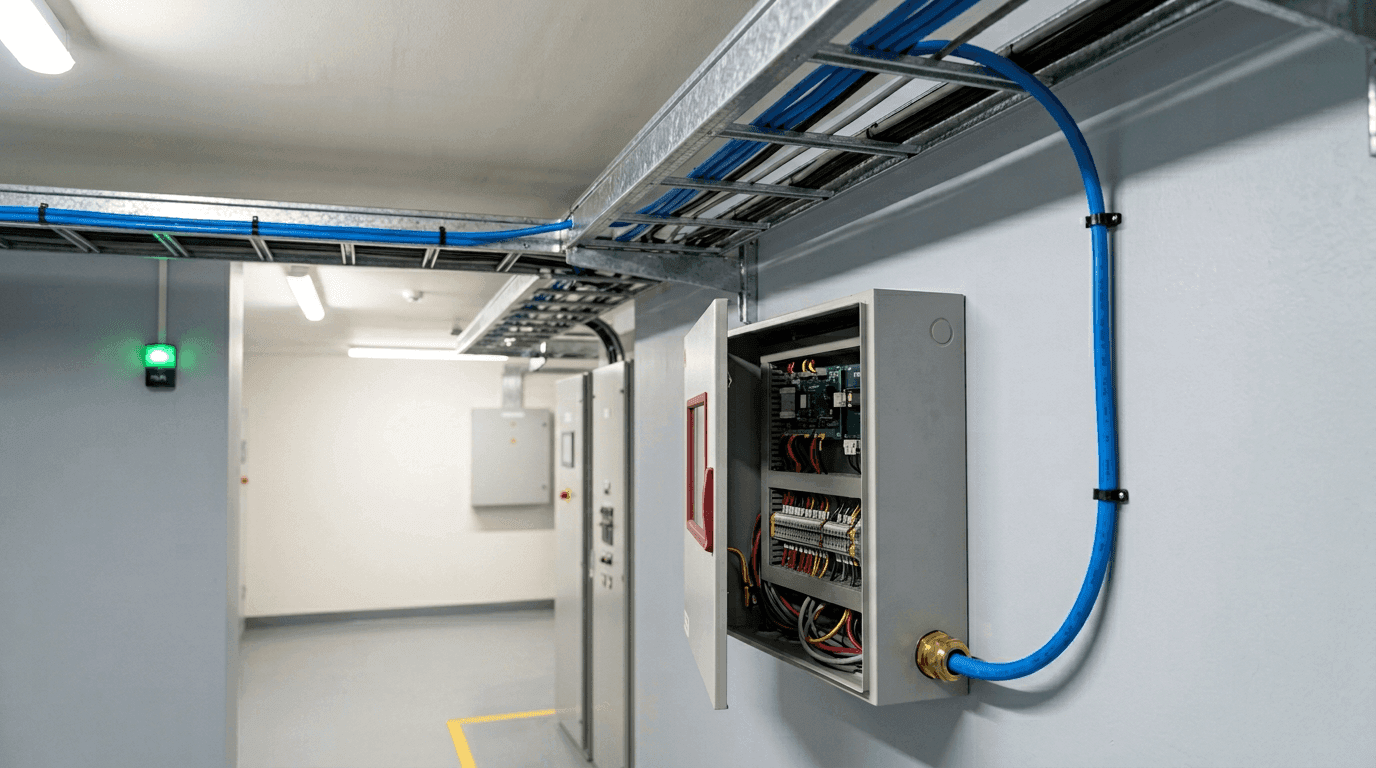
- LHD loops on addressable or conventional fire panels
- Appliance over-temperature cut-off circuits
- Any detection topology where the downstream device expects a short-on-activation signal
Non-Metal Core (specialised)
No continuous metallic conductor runs through the active section. The thermosensitive compound itself is the resistive path, so the cable behaves as a temperature-dependent resistor rather than as a conductor pair that closes to a dry contact. Less common, but the right answer when the route benefits from a more mechanically forgiving construction, simpler termination, or fewer galvanic and electromagnetic concerns than a continuous metal conductor pair would introduce.
Trigger Physics — Two Events, One Cable
Trigger 1: Thermal-Threshold Collapse
The thermosensitive compound is engineered to hold dielectric strength steady from -40°C up to just below its activation point. Above that point, the compound undergoes a rapid softening (for some formulations) or decomposition (for others) — the molecular network loses its load-bearing structure. The two conductors close the gap and the panel sees a short. Response time is typically a few seconds.
Trigger 2: Sudden, Direct Flame
A direct flame is the other end of the same mechanism rather than a separate one: instead of a slow ambient rise, it is a concentrated, intense heat source. Where the flame reaches the cable the compound is driven past its activation point within seconds, the conductors short at that spot, and the panel alarms — regardless of the ambient temperature elsewhere on the run. The response is local to the point of flame contact, not something that has to travel along the cable to work.
Responding to both a gradual ambient build-up and a sudden local flame is what makes a fusible cable dependable across fire types: a slow smouldering fire eventually raises the surrounding heat past the threshold, while a fast flaming fire collapses the compound locally within seconds. One cable covers both signatures.
Material Choices That Actually Change Performance
If the conductor, compound or jacket is off, the whole cable is off. These are the choices that show up in service:
- Conductor alloy. Pure copper is the default; tinning resists oxidation in humid service; nickel-copper is the right answer in salt-spray or chemical-plant environments.
- Compound formulation. Activation point is tuned by polymer chemistry and filler ratio, not by changing "how thick" anything is. The nominal number matters; the batch-to-batch spread matters more.
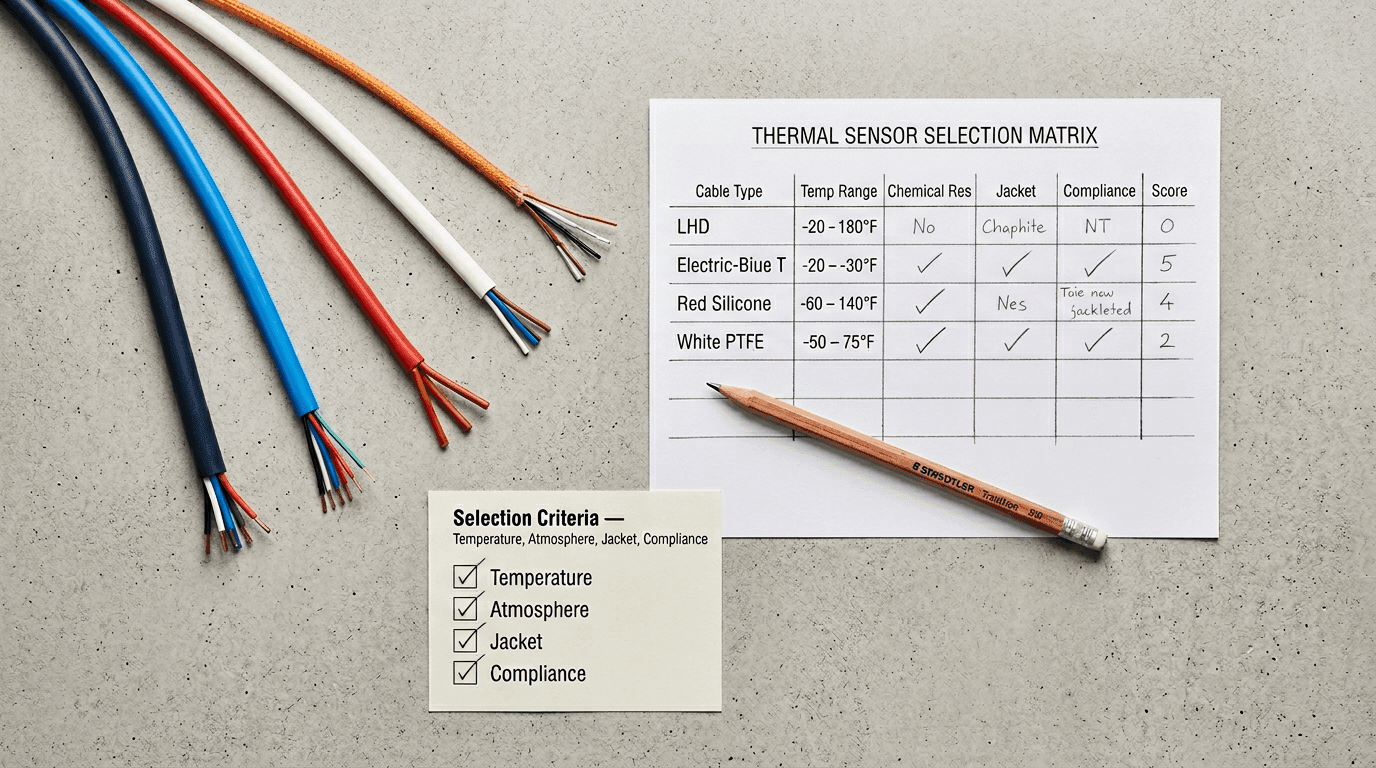
- Jacket polymer. PVC for indoor low-cost runs, LSZH where smoke-toxicity codes forbid PVC, silicone for high-ambient motor applications, fluoropolymer for chemical environments.
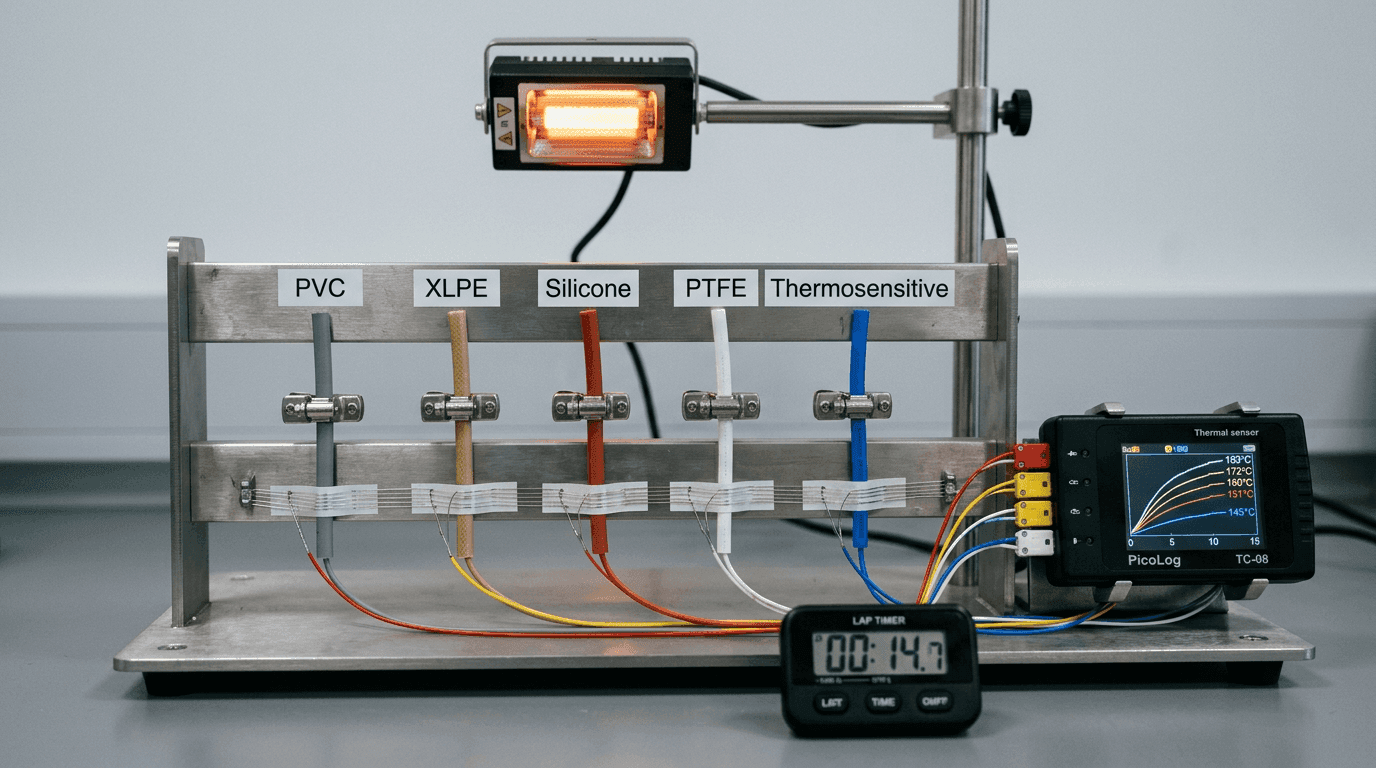
- Wall thickness. Thicker jacket = slower response. Response time can be engineered by wall thickness alone — we regularly do this for customers with ambient-rejection requirements. The quantitative model behind that choice (diffusivity, the L² scaling and a property table for each insulation family) is in engineering the response time of a thermosensitive cable.
How QC Verifies This Stack
The four-layer architecture only behaves the way the diagram says if every layer holds its tolerance. That is what our outgoing inspection actually pins down — jacket geometry, conductor lay-length, compound activation point, response-time uniformity along the spool, and a handful more. The full nine-parameter QC pass sits in its own note, but the short summary is that every shipment leaves with a per-batch report keyed to the lot number printed on the jacket. If a number on that report is missing, the cable did not pass.
Closing Thought
Once you understand the four-layer anatomy and the two trigger mechanisms, specifying a thermosensitive cable becomes a matter of matching layer choices to your application constraints — not picking a catalog part number and hoping. The walk-through above sits inside a single architecture — the metal-conductor variant — and the buyer-side comparison between that variant and the non-metal-core alternative, with five engineering axes and five deployment scenarios, is in our companion cross-section comparison of metal-core and non-metal-core architectures. The two cut-off architectures the cable then drops into — one-shot fusible vs resettable PTC — are unpacked in one-shot or resettable thermal cutoff cable: the spec decision; the OEM integration patterns that exploit this anatomy sit in thermosensitive cable as the last line of appliance safety. That is the level of conversation our engineering desk prefers.
If you would like a formulation walk-through against your specific application, message engineering — we will share a data pack and an evaluation sample (subject to sample availability and project review).
FAQ — Thermosensitive Cable Anatomy
What are the four layers inside a thermosensitive cable?
In the standard metal-conductor architecture, a thermosensitive cable is built as four concentric functional layers around the cable axis: (1) two or more drawn metal conductors, typically tinned copper or nickel-copper, twisted on a calibrated lay-length; (2) a thermosensitive compound — a proprietary polymer formulation that holds dielectric strength below the rated activation point and collapses predictably above it; (3) a thin structural insulation layer that keeps cable geometry stable in service; and (4) the outer jacket, which carries mechanical, chemical, UV and waterproof duties.
How does a thermosensitive cable actually trigger an alarm?
A thermosensitive cable responds to two fire signatures through one mechanism — the compound collapsing at its hottest point. The first is a gradual thermal rise: above the rated activation point, the compound's molecular network loses load-bearing structure, the two conductors close the gap, and the panel sees a clean dry-contact short. The second is a sudden, direct flame: a concentrated flame drives the compound past its activation point at the point of contact within seconds, shorting the loop locally regardless of the ambient temperature elsewhere. Either signature drives the alarm.
What is the difference between metal-conductor and non-metal-core thermosensitive cable?
The metal-conductor architecture (the workhorse) places two parallel or twisted metal conductors separated by the thermosensitive compound; on activation, the compound collapses and the conductors short — this is the default for LHD loops, appliance over-temperature cut-off circuits, and any panel expecting a short-on-activation signal. The non-metal-core architecture has no continuous metallic conductor through the active section; the thermosensitive compound itself is the resistive path, so the cable behaves as a temperature-dependent resistor. It is specialised — used where the route benefits from a more mechanically forgiving construction, simpler termination, or fewer galvanic and electromagnetic concerns than a continuous metal conductor pair would introduce.
Can the response time of a thermosensitive cable be tuned?
Yes. Response time is engineered primarily through jacket wall thickness and compound formulation. A thicker jacket slows the heat path to the compound and lengthens response; a thinner one accelerates it. Conductor geometry, compound filler ratio and lay-length are secondary levers. Two cables with the same activation temperature can alarm 20 seconds apart depending on these choices — which is why specification has to match the application's thermal-rejection requirements rather than copy a generic datasheet.