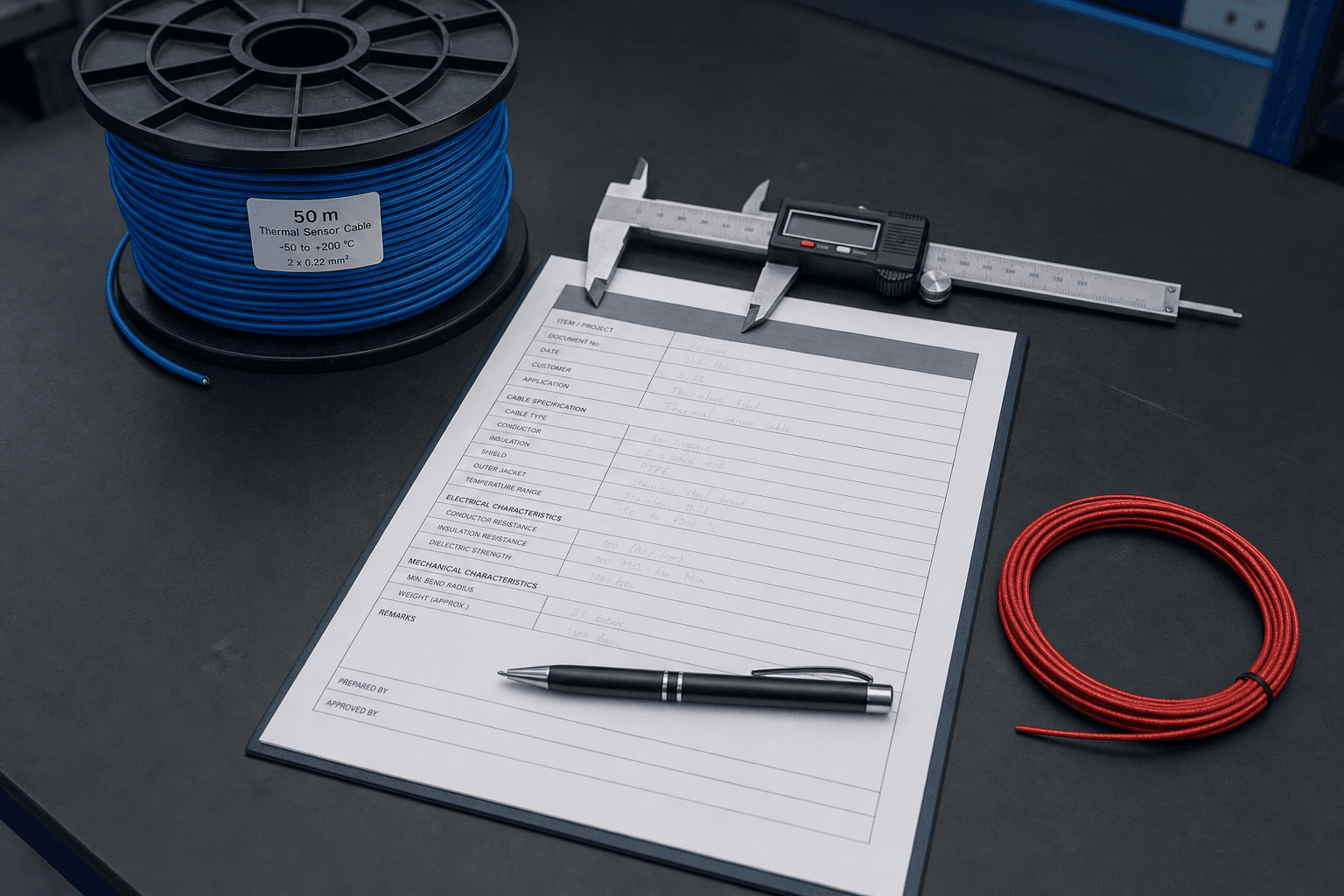
Field 5 of a thermal sensor cable specification sheet asks for one row — the jacket material. The row is short. The decision behind it is not. Thermal sensor cable jacket material selection is the place where the spec sheet meets the deployment environment, where a meaningful share of the cable's unit cost is decided, and where over-specification quietly inflates a project that already had a defensible answer.
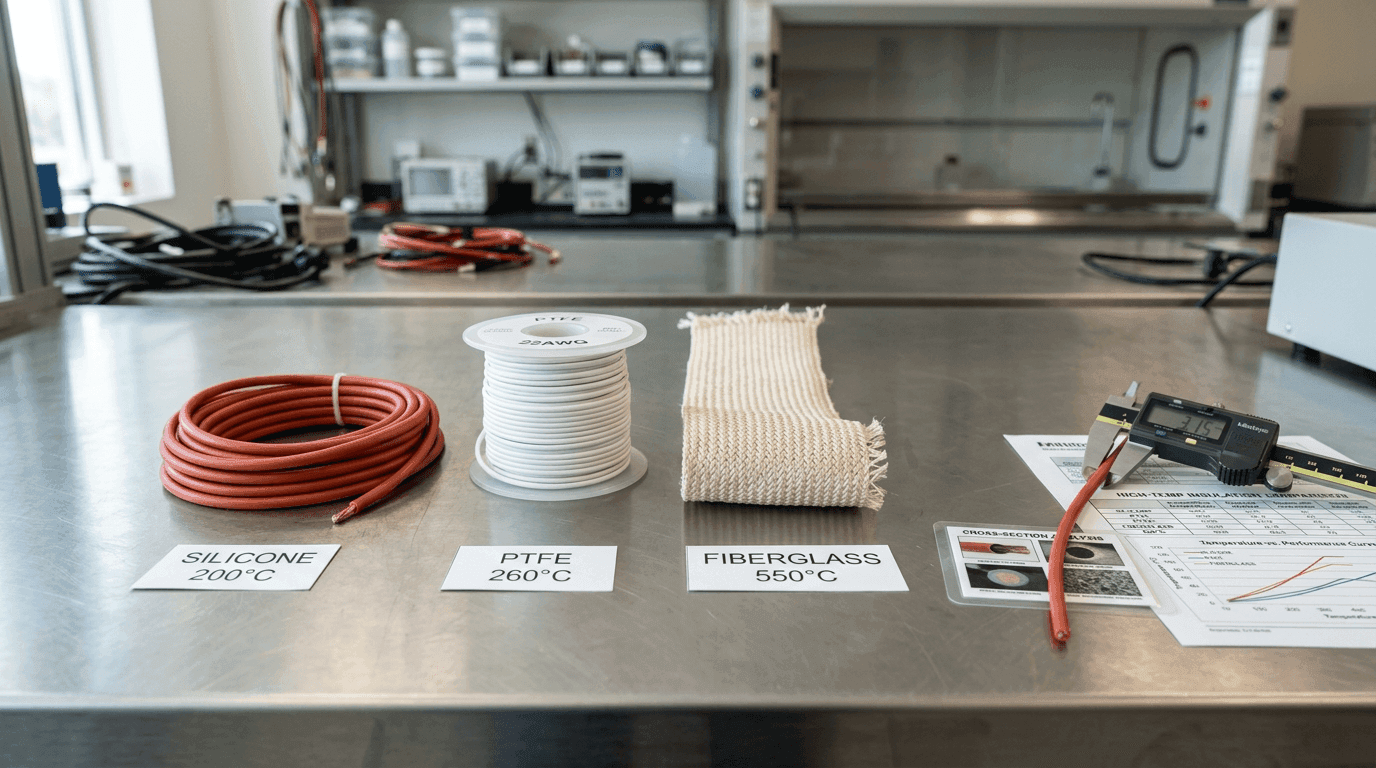
This page extends that one row into a buyer-side decision matrix. The engineering reference for the field itself is Field 5 of the thermal sensor cable specification guide; the deeper material comparison between silicone, PTFE and fiberglass sits in silicone vs PTFE vs fiberglass insulation; the overall five-step selection flow that jacket sits inside is the five-step selection framework. The cable family this discussion applies to — LHD for linear heat detection and TS for in-device thermosensitive cut-off — is on the cable series page. This note assumes those upstream choices are settled and walks the jacket decision itself: five materials, five axes, five deployment scenarios, the standards that decide whether a jacket can be installed at all, and four A/B decisions that recur on RFQs.
When the Jacket Decision Earns Time, and When It Quietly Defaults
Not every project needs a long deliberation on Field 5. The decision earns time when the route puts pressure on the jacket; on benign routes the engineering default does most of the work.
the route runs through a tunnel, metro, public building or any space with a halogen-free code obligation, when the working ambient sits above 70 °C, when the atmosphere contains solvents, oils, acids, salt fog or steam, or when the cable is exposed to repeated mechanical flex over its service life.
the deployment is a dry indoor private switchroom, the route ambient sits below 70 °C, the atmosphere is clean conditioned air, and the cable runs once through a fixed cable tray with no maintenance re-routing planned.
the working-ambient calculation in Field 3 of the spec guide, the activation-class decision in Field 2 selection, the IP rating in Field 7, or the route survey itself. Jacket is one row among twelve.
The boundary is useful. A clean jacket decision does not settle whether the route ambient was correctly characterised, nor what the cable does at year ten — those questions belong to the engineering reference. What this page does is land Field 5 in a way the downstream documents can read without re-opening the choice.
The Five-Axis Decision Matrix
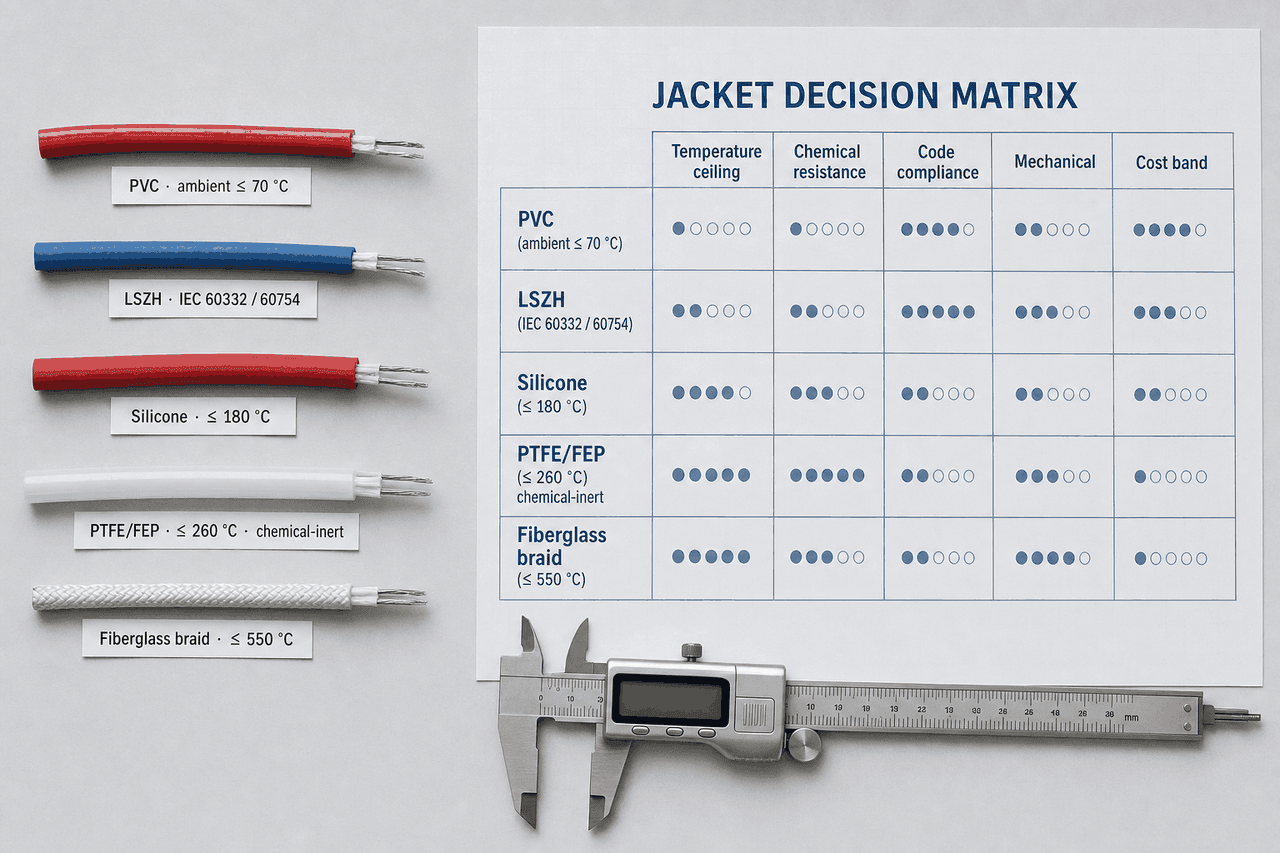
Five jacket families cover the bulk of thermal sensor cable production: PVC, LSZH, silicone, fluoropolymer (PTFE, FEP, PFA) and fiberglass braid. Two more — XLPE and TPE/TPU — are available on custom orders as PVC substitutes when a project asks for them; the matrix below stays with the five families that cover the spec guide's Field 5 declared range.
The matrix scores each material on five buyer-side axes, with cells written in engineering language rather than star ratings. Temperature figures are typical continuous-service envelopes for a representative compound; what a specific product actually accepts depends on the supplier's grade, wall thickness and certification scope. Cost figures are indicative and should not be cited as procurement guarantees; actual quotes depend on grade, wall thickness, certification scope and order volume.
| Material | Temperature ceiling | Chemical resistance | Code compliance | Mechanical envelope | Cost band (indicative; reference noted per row) |
|---|---|---|---|---|---|
| PVC | ~70 °C continuous; stiffens below ~5 °C. | Fair on most everyday environments; attacked by aromatic solvents, mineral oils and acid mist over time. | Acceptable for indoor private routes; fails most tunnel and public-building codes on smoke toxicity. | Good on static indoor runs; plasticiser migration limits decade-scale service. | ~1× (the baseline reference). |
| LSZH | ~90 °C continuous for a typical compound. | Fair to good; some LSZH compounds get attacked over time in aggressive solvent or chlorinated atmospheres. | Default for tunnels, metros, public buildings; halogen-free per IEC 60754, smoke density per IEC 61034, flame propagation per IEC 60332-1-2. | Good for cable-tray installation; acceptable bend life on fixed routes. | ~1.5× over PVC; the premium pays for the smoke-toxicity property. |
| Silicone | ~180 °C continuous; brief excursions to ~300 °C for minutes. | Fair; swells in aromatic solvents and mineral oils; attacked by strong acids above 80 °C; reversion above 150 °C in steam. | Self-extinguishing, leaves insulating ash; pairs with IEC 60331 circuit-integrity targets; pass most fire codes with the right compound. | Excellent flex life; low modulus and high elongation; comfortable in drag-chain and robotic routes. | ~2× over PVC; the practical floor when ambient passes 70-90 °C. |
| PTFE / FEP / PFA | ~260 °C continuous (PTFE / PFA); ~200 °C continuous (FEP). | Excellent; inert to nearly everything below 260 °C; chemical-plant and semiconductor default. | Non-flammable, limiting oxygen index above 95%; may release small HF gas above ~400 °C; UL VW-1 friendly. | Good; PTFE can cold-flow under clamping pressure; tape-wrap or paste-extrusion construction. | ~3-5× over silicone (PTFE), ~2.5-4× (FEP); the smallest premium once chemistry is the deciding axis. |
| Fiberglass braid | ~550 °C continuous (bare braid); ~600 °C ambient when properly jacketed; brief excursions above 800 °C. | Depends entirely on impregnation; bare braid wicks moisture and solvents through the porous weave. | Non-combustible glass body; binder can burn; raw braid usually unsuitable for plenum runs without impregnation. | Poor as primary on flex routes — filaments abrade and shed; excellent as a reinforcement layer over silicone or PTFE. | ~0.6-0.8× as bare braid; ~1.5-2× when reinforced over a silicone or PTFE core. |
Two reading rules apply to this matrix. First, no cell is a substitute for another cell — chemistry does not compensate for code, and cost band does not compensate for temperature ceiling. Second, the matrix scores each material on each axis independently and does not rank materials across axes — a row that looks weak on one axis may be the only realistic answer once another axis is binding.
Two cost patterns surface from the rows. First, the band between 70 and 180 °C is where most cost-driven decisions happen — PVC, LSZH and silicone cover that range three different ways. Second, fluoropolymer and fiberglass do not sit on a cost continuum with the first three; they belong to deployments where temperature or chemistry leaves no realistic alternative, and the cost band reflects that.
Five Deployment Scenarios — Reverse Lookup
The matrix above reads from material to axis. Most procurement decisions move the other direction: the route is fixed, the deployment is named, and the question is which jacket lands on Field 5. The five scenarios below cover the bulk of LHD and TS deployments; the buyer side of LHD cable specification for chemical and mining plants walks the chemical-plant scenario in deeper field detail.
Standards Mapping — Which Standard Tests Which Property
Five standards recur on jacket spec rows and each tests a separate property. The table below is the cross-reference the document package in Field 10 of the spec sheet has to satisfy — citing one standard as a stand-in for another leaves a verifiable gap that the AHJ or the buyer-side document review will surface later.
| Standard | What it tests | Which materials usually carry it |
|---|---|---|
| IEC 60332-1-2 | Single vertical-wire flame propagation — a flame-spread test only, independent of smoke and halogen content. | Entry-level requirement for most jacket families; PVC, LSZH, silicone, fluoropolymer and properly jacketed fiberglass commonly all pass. |
| IEC 60754-1 | Halogen acid-gas content released during combustion. | Core halogen-free certificate for LSZH; fluoropolymers usually pass with HF-gas note above ~400 °C; PVC typically does not pass. |
| IEC 60754-2 | pH and conductivity of combustion gases — the second half of the halogen-free claim. | Sits alongside IEC 60754-1 on LSZH document packages; fluoropolymer requires independent statement due to HF behaviour. |
| IEC 61034 | Smoke density measured in a defined three-cubic-metre chamber. | Core low-smoke certificate for LSZH; silicone usually passes; PVC typically does not. |
| EN 50575 CPR | European Construction Products Regulation reaction-to-fire classification for cables in permanent installation, with classes from Aca through B1ca, B2ca, Cca, Dca to Eca / Fca. | EU-side installation gate: PVC typically Eca; LSZH compounds reach B2ca or Cca depending on grade; required class is named by the local authority and the building type. |
| UL VW-1 | North American vertical-wire flame test for consumer-electronics and OEM applications. | Consumer-electronics, EV battery and appliance applications usually require this on the document package; thermosensitive cable inside host products often carries it. |
One reading habit helps. When a supplier quote names only IEC 60332-1-2 on a tunnel or public-building project, the document package is incomplete — IEC 60754 and IEC 61034 are the halogen and smoke halves of the same compliance scope, and EN 50575 CPR is the EU installation gate that decides whether the cable can be installed at all. RFQ Fields 07–08 ask for the required standards and the full document set rather than a single standard cite so this gap surfaces during the RFQ rather than at the AHJ meeting.
Four A/B Decisions That Recur on RFQs
Where the Jacket Choice Meets the Rest of the Sheet
Field 5 does not end at the jacket row; it ties into four other rows on the same spec sheet, and into two documents downstream of the sheet itself. The map below shows how the chosen jacket travels through each one.
| Downstream row or document | How the jacket choice lands there |
|---|---|
| Field 3 — Working Ambient Temperature | The jacket continuous-service ceiling has to sit above the highest sustained working ambient with the same headroom rule the activation class follows on its own line. |
| Field 7 — Ingress Protection (IP Rating) | The jacket does not imply an IP rating on its own; IP67 or IP68 has to be tested and stated independently of jacket material on the same row — and the cable body, the terminations and the install all have to meet that class, since water enters at the joints. |
| Field 8 — Mechanical Envelope | Bend radius, tensile and crush ratings depend on jacket family — silicone and fiberglass-reinforced constructions handle different flex envelopes than PVC or LSZH on the same route. |
| Field 10 — Compliance Documents | The document package the supplier ships with the cable has to match the standards on the jacket row — IEC 60332 / 60754 / 61034 for LSZH, EN 50575 CPR for EU permanent installation, UL VW-1 for North American consumer applications. |
| RFQ Fields 07–08 — Standards and documentation set | The RFQ names the required standards and the document set rather than relying on a single compliance cite, so an incomplete package surfaces during quoting rather than at the AHJ acceptance meeting. |
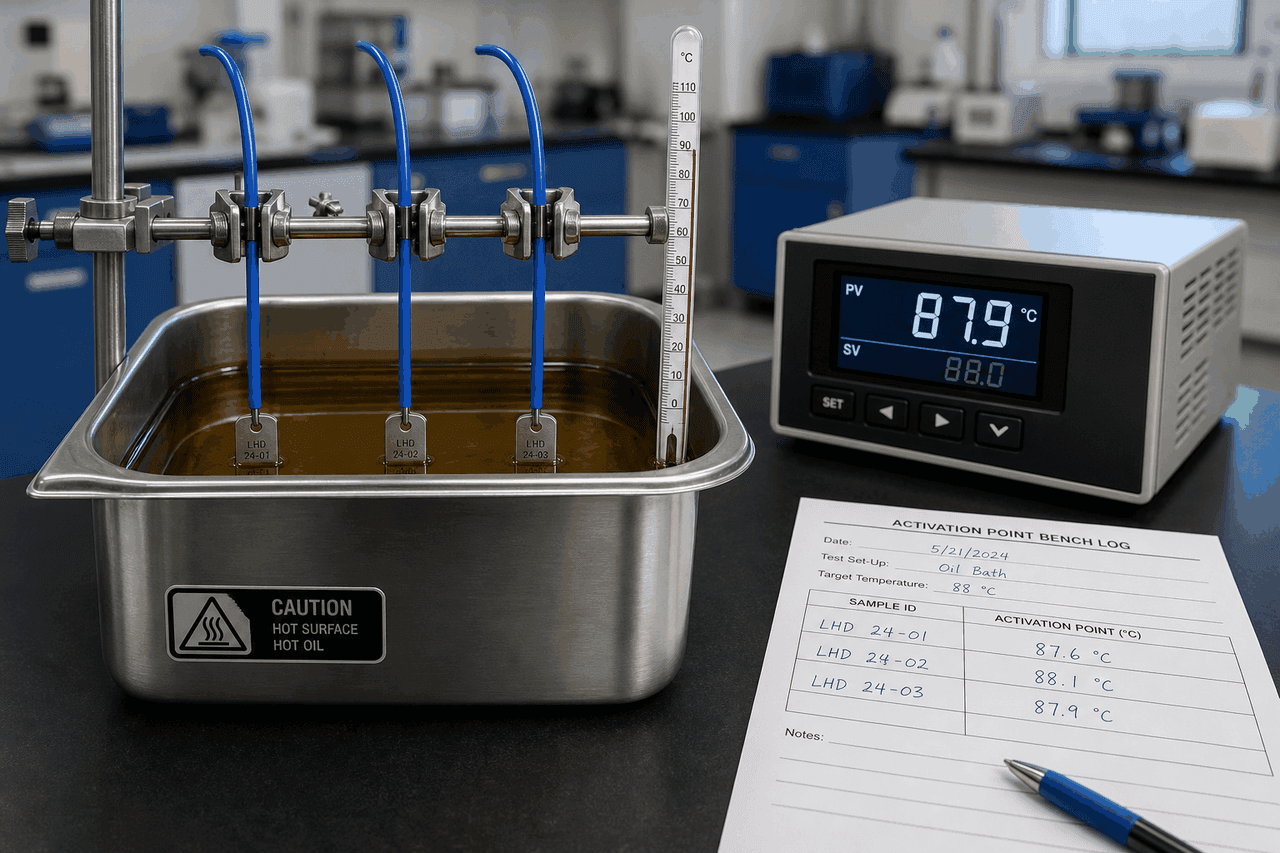
| Sample evaluation — visual & dimensional check | The first sample-stage bench check reads jacket marking, OD against tolerance and any visible jacket defects; the compliance documents named in Spec Field 10 and RFQ Fields 07–08 are checked in the document review that precedes PO. |
The pattern is consistent across the six rows. The jacket choice on Field 5 is upstream; four spec-sheet rows and two downstream documents read against it. A clean choice at this stage lets each downstream check answer a precise question — does the document package match, does the IP rating hold, does the bend radius accept the route geometry — rather than re-open the material selection.
Five materials, five axes, one row on the spec sheet. The matrix does not pick the jacket; the route picks the jacket, and the matrix names what the route was already telling the spec sheet to write. Read the row from the engineering axes, write it with the standards the document package has to satisfy, and let the downstream rows confirm the choice rather than re-litigate it.
FAQ — Jacket Material Decision Matrix
How do I choose the jacket material for a thermal sensor cable?
Work the four engineering axes in order before letting cost narrow the choice. First, the temperature ceiling — the highest sustained ambient on the route has to sit below the jacket's continuous-service rating, with the alarm event handled by the activation class above it rather than by jacket survival. Second, the chemistry — solvents, oils, acids, salt fog or steam decide whether silicone or a fluoropolymer is the floor, regardless of temperature. Third, the code compliance — public-building, tunnel, metro and EV applications layer IEC 60332 flame propagation, IEC 60754 halogen acid-gas, IEC 61034 smoke density and EN 50575 CPR class on top of the engineering choice, and the AHJ does not negotiate them. Fourth, the mechanical envelope — flex life, abrasion and clamping behaviour distinguish a jacket that survives ten years of route maintenance from one that needs replacement on the third re-route. Cost band sits last as a sanity check, not as a starting point. Picking the jacket by price first and back-rationalising the route is the most common over-specification source the spec guide warns against.
When is LSZH the right jacket and when is it over-specification?
LSZH is the default for tunnels, metros, public buildings and any application where local fire codes require low-smoke and halogen-free jackets, where the value of low smoke density and low halogen acid-gas release in a fire is real because the route runs through occupied evacuation paths. It earns its premium over PVC roughly the order of one and a half times the unit price on three properties: IEC 60754-1 halogen acid-gas content, IEC 60754-2 pH and conductivity of combustion gases, and IEC 61034 smoke density. Over-specification surfaces on dry indoor switchroom routes inside a private industrial site with no halogen-free code obligation, where PVC handles the same route at a fraction of the unit price and the LSZH premium pays for a code property the deployment will never measure. It also surfaces on chemical-plant routes that should have moved to a fluoropolymer in the first place — LSZH compounds are fair-good on chemistry but get attacked over time in chlorinated, acid-mist or aggressive solvent atmospheres, where PTFE or FEP is the irreplaceable choice.
Which standards apply to thermal sensor cable jacket material — IEC 60332, IEC 60754, IEC 61034, EN 50575 CPR and UL VW-1?
Five standards recur on jacket spec rows and each tests a separate property — citing one as a stand-in for another is the common procurement mistake. IEC 60332-1-2 tests single vertical-wire flame propagation, which is a flame-spread test only and says nothing about smoke or halogen content. IEC 60754-1 tests halogen acid-gas content and IEC 60754-2 tests pH and conductivity of combustion gases — these together carry the halogen-free claim used on LSZH compounds, and they are independent of flame propagation. IEC 61034 tests smoke density in a defined chamber and is the standard behind the low-smoke claim on LSZH; it is again independent of flame and halogen. EN 50575 CPR is the European Construction Products Regulation for cables in permanent installation, which classifies cables from Aca down through B1ca, B2ca, Cca, Dca to Eca and Fca; PVC typically lands at Eca, LSZH compounds reach B2ca or Cca depending on grade, and CPR is the EU-side gate that decides whether a cable can be installed at all in regulated buildings. UL VW-1 is the North American vertical-wire flame test that consumer-electronics and EV applications usually require. Citing IEC 60332 to satisfy a smoke-density requirement, or IEC 61034 to satisfy a halogen-free requirement, leaves a verifiable gap on the document package.
When should the spec sheet pick silicone over PTFE, or fiberglass over both?
Silicone is the right answer when the route asks for flex life, low-temperature service down to about minus sixty Celsius, or fire circuit integrity in the sense of IEC 60331 — typical examples are motor-adjacent runs, appliance lead-wires, robotic drag-chain cable and thermosensitive cable inside hot-running consumer products. Silicone tolerates about 180 Celsius ambient continuously. PTFE, FEP or PFA is the right answer when the route contains aromatic solvents, mineral oils, strong acids, steam above about 150 Celsius, or sustained ambient between 200 and 260 Celsius — chemical plant, petrochemical, semiconductor and pharma routes default to fluoropolymer despite a delivered price typically three to five times silicone, because no lower-cost material reliably resists chemical attack at that temperature. Fiberglass-braided jacket as primary insulation is uncommon outside open-coil industrial heater elements, tube-furnace feed-throughs and appliance thermal fuses where ambient exceeds about 300 Celsius and the chassis provides mechanical protection. Its more frequent role is as a reinforcement layer over a silicone or PTFE core, adding abrasion resistance without changing the underlying chemistry. The companion three-material insulation comparison walks silicone, PTFE and fiberglass in deeper material detail.