A cable arrives stamped IP68, the highest ingress class on the data sheet, and the project files it as solved. Three years later the loop starts dropping into fault every time it rains, then clearing once the site dries out. The cable still tests as IP68 on a bench. Nothing about the reel was wrong — the water did not come through the jacket. It came through a gland, a cut end and a splice sleeve, and the thermal sensor cable IP rating never covered those in the first place.
This note is about the gap that opens between the number on the cable and the protection of the installed loop. It does not re-run the field diagnosis sequence — separating a wet fault from a real activation with loop and insulation-resistance readings is the subject of the short-circuit field diagnosis note — nor the physics of why a wet dielectric shifts the panel reading, which sits in the engineering reference. Here the focus is the buyer-side one: where moisture actually gets in, why it shows up as a slow nuisance drift rather than a flood, and how to specify IP so the whole loop holds, not just the cable on the reel.
Two Ratings That Aren't the Same
One distinction does most of the work, and confusing the two is how an IP68 cable ends up in a loop that behaves like an unrated one.
A tested property of the cable's overall construction: jacket, inner sheath and the way the layers seal against each other. It travels with the reel and holds for years. It describes a length of intact cable and nothing else.
The effective protection of the run after it is cut, glanded, spliced and terminated on site. It is set by the weakest joint, not the cable — and the joints are separate items, fitted by the install crew, that the cable's certificate never covered.
A loop is only as waterproof as its wettest joint. Buy the highest IP cable on the market and terminate it with an unsealed gland and a splice sleeve fitted without adhesive heat-shrink, and the installed protection drops to whatever those joints deliver — often a long way below the number printed on the jacket.
Water Gets In at the Joints, Not the Jacket
On a healthy run, the intact jacket is rarely the failure path. Moisture finds the discontinuities — the points where the cable was opened, joined or damaged after it left the factory.
| Entry point | Why it leaks |
|---|---|
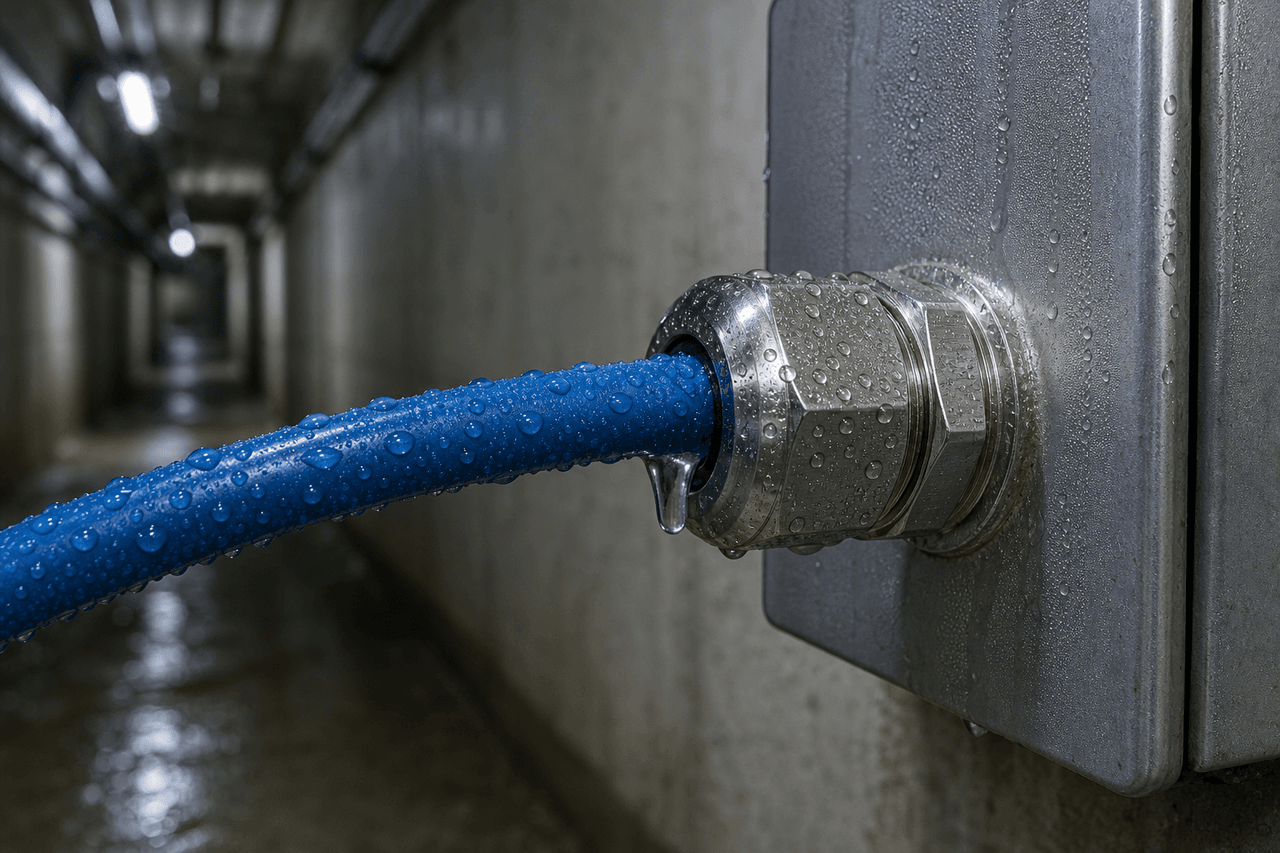
| Cable glands | Wrong size, under-torqued or fitted without the sealing insert, so the entry into the box or panel is open to wash-down and condensate. |
| Cut and terminated ends | An unsealed cut end is an open straw into the cable core. End caps and boots are an install step that gets skipped under time pressure. |
| Splice sleeves | Sleeves fitted without adhesive-lined heat-shrink wick water along the conductors. The splice tests fine dry and leaks once the route is wet. |
| Jacket nicks | Pinholes and abrasions at tray transitions, crush points and over-tight cable ties — small, hidden, and exactly where the route is most mechanically stressed. |
Every one of these is a site-side joint, not a cable defect. That is the whole point of separating rated IP from installed IP: spending more on the cable does nothing for the failure path if the termination kit and the install procedure stay where they were.
Why It Reads as a Nuisance Alarm, Not a Flood
Moisture ingress almost never announces itself. It does not short the loop in one event — it shifts a baseline slowly. Water entering through a joint changes the dielectric properties of the inner insulation, and the panel's loop reading drifts a little further from its commissioned value with each wet season. In this failure pattern the conductor is not corroding and the sensing compound is not aging; the panel just reads a different number as the wet dielectric changes, and once that number crosses a threshold the loop is reported as a fault or a low-resistance event that looks like activation.
Two things make it hard to catch. First, the timing: because the drift is gradual, the first fault often appears months or years after a clean commissioning, long after anyone is looking at the install quality. Second, the weather link: the loop fails after rain, tunnel washing or a defrost cycle, then recovers hours later once the site dries — while the entry path stays wide open for the next time. That intermittent, weather-keyed behaviour is the fingerprint of a wet joint. Confirming it in the field — isolating the loop and reading insulation resistance against the conductor and shield — is the job of the field diagnosis sequence; the value of getting the IP specification right is that the call never has to be made.
Specifying the IP That Holds
The fix is not a higher number on one line. It is writing the IP rating as three things that all have to meet the same class, because the loop is only protected where the weakest of the three is.
Specify and require the cable's tested IP class explicitly. Do not infer it from the jacket: silicone is not automatically IP68, LSZH is not automatically IP67. The rating comes from the whole construction and has to be tested and stated.
Rate the glands, end caps and splice kit to the same ingress class as the cable. This is the line most often left blank, and it is the one that decides the installed IP, because the joint is where water gets in.
Confirm the install crew can actually deliver the class: adhesive-lined heat-shrink on splices, correctly torqued glands, sealed cut ends. A spec the site cannot execute creates a verification gap — the cable passes its bench test and the as-installed loop fails commissioning.
Which class to write on all three is a route question, not a default. IP68 is not a free upgrade over IP67 — it costs more and earns its place only where water genuinely pools.
| Class | What it covers | Right when the route is… |
|---|---|---|
| Unrated / low IP | A dry, sheltered tray with no wash-down, dust or condensation cycle. | Indoor and protected only — dry, not washed down, where a high IP adds cost and nothing else. |
| IP67 | Short-duration immersion to ~1 m for ~30 min; wash-down, condensate, rainy-season tray exposure. | Most indoor and sheltered outdoor runs, wash-down plants, coastal sites. |
| IP68 | Continuous immersion to a manufacturer-declared depth and duration, beyond the IP67 condition. | Tunnel drainage routes, underground substations, below-grade galleries where water can stand for hours. |
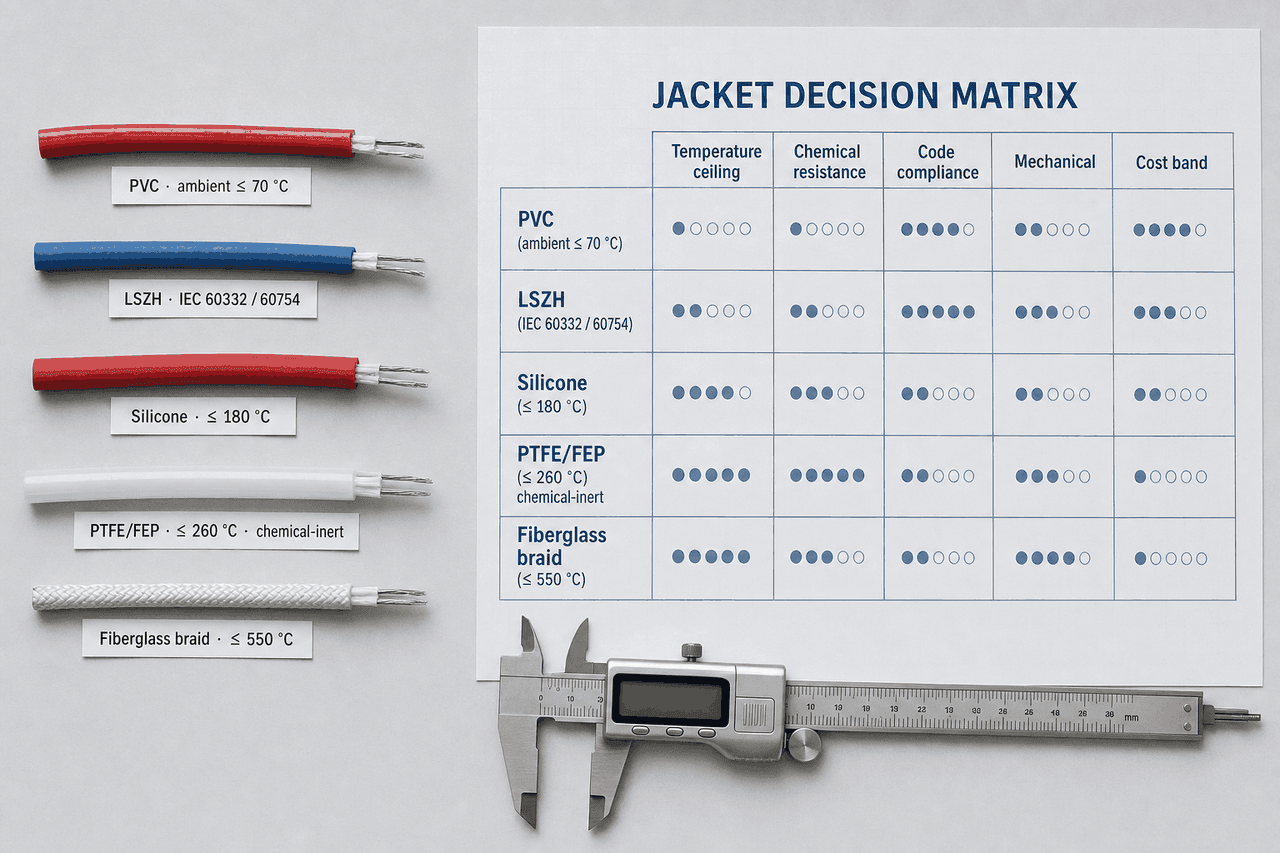
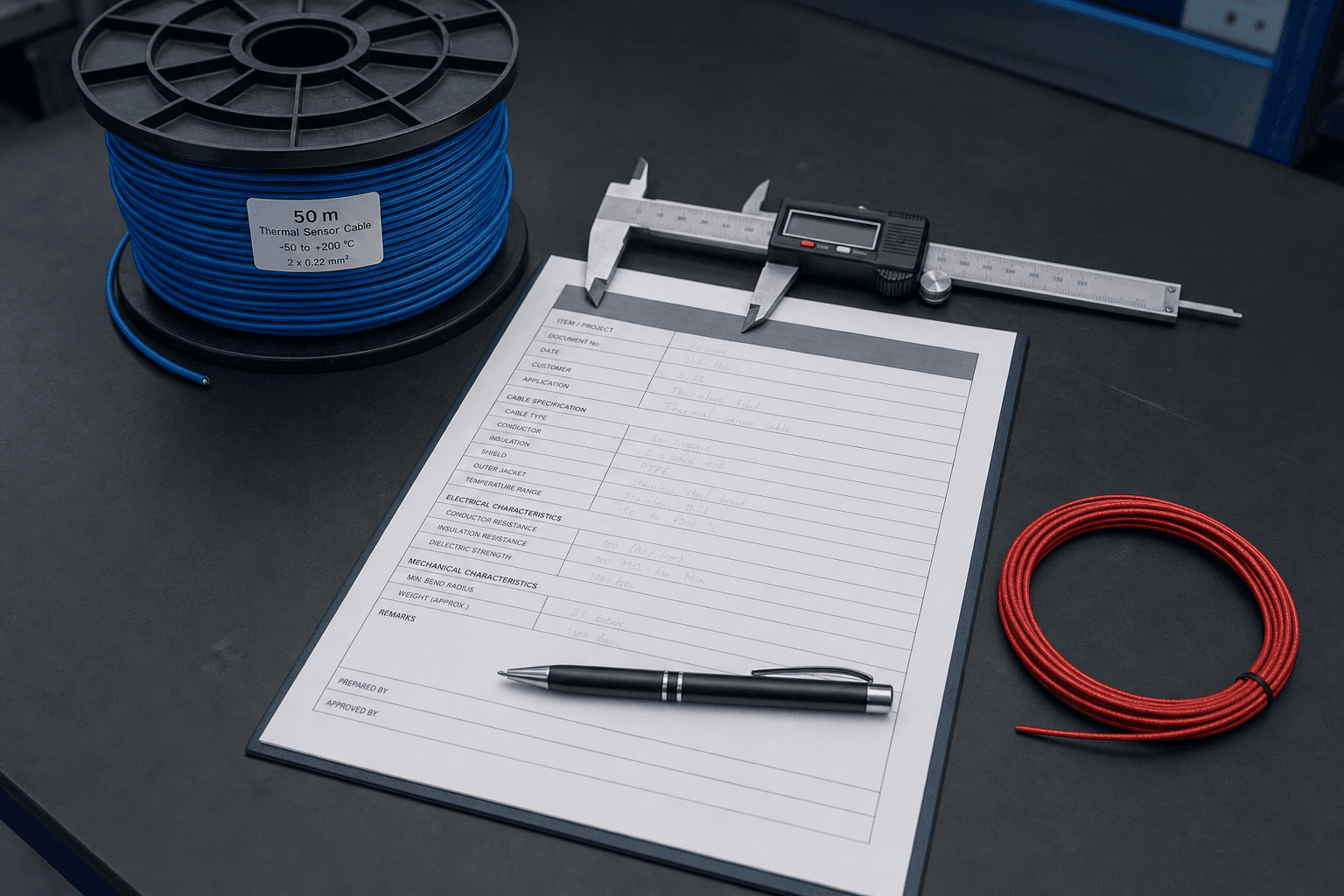
The IP row sits next to the jacket row, and the two are easy to conflate. They are not the same decision: the jacket is chosen for temperature ceiling, chemical resistance and code, and a given jacket does not carry an IP class on its own. The jacket material decision matrix settles that choice separately; the IP rating is then specified and tested on top of it. Both belong on the spec sheet as distinct lines — Field 5 and Field 7 of the specification guide.
Verifying It in the Field
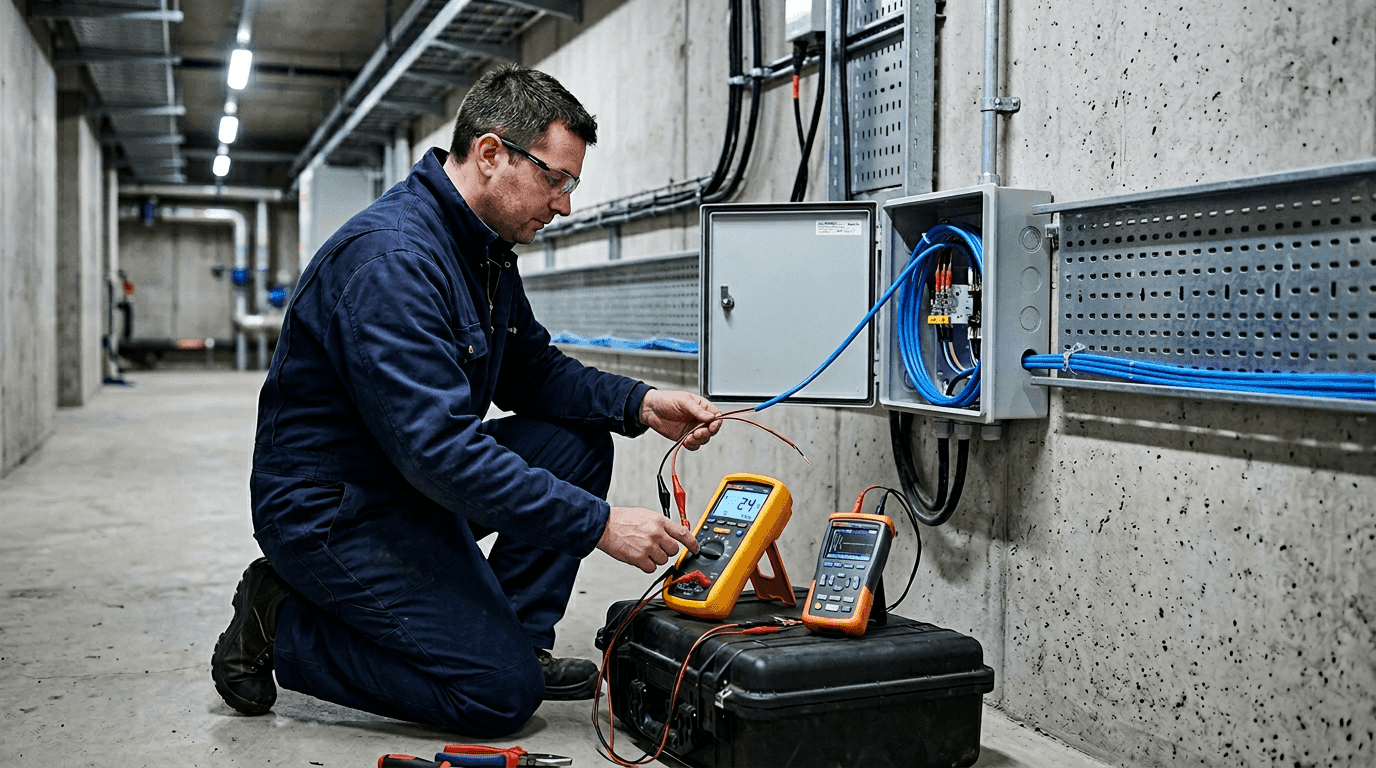
Two checks turn the specification into something that can be defended later. Match the IP class to the wettest hour the route will see — wash-down, seasonal flooding, the worst condensation cycle — and check the termination kit and installation procedure against that same number before signing. Then, at commissioning, record a 500 V insulation-resistance baseline for the loop: a healthy installed run normally reads well above 100 MΩ. That number going into the maintenance file is what lets a later drift be measured rather than guessed — a reading that has fallen into the contamination range against a clean commissioning baseline is evidence of a wet joint, not a hunch.
Ingress protection: cable body tested to IP__ (stated, not implied through jacket). Termination, gland and splice kit rated to the same class. Installation procedure to deliver that class on site — adhesive-lined heat-shrink splices, torqued glands, sealed ends. 500 V insulation-resistance baseline to be recorded at commissioning.
The number on the reel protects a length of intact cable. The loop on the wall is protected only where its wettest joint is — and the joints are exactly what the cable's IP rating never covered. Specify the cable body, the termination kit and the install procedure to the same class, match that class to the wettest hour the route will see, and bank a commissioning baseline so a slow drift three years out has something to be read against.
FAQ — Thermal Sensor Cable IP Rating and Moisture Ingress
Does a thermal sensor cable need IP67 or IP68?
Match the IP rating to the wettest hour the route will actually see. IP67 covers short-duration immersion to roughly one metre for thirty minutes and handles wash-down, condensate runs and rainy-season cable-tray exposure — enough for most indoor and sheltered outdoor routes. IP68 covers continuous immersion to a manufacturer-declared depth and duration, beyond the IP67 condition, and is the right choice where water can stand around the cable for hours: tunnel drainage routes, underground substations and below-grade galleries. IP68 is not a free upgrade. On a dry, sheltered route that is not washed down and has no condensation cycle, IP67 — or even an unrated jacket on a properly routed tray — covers the deployment at lower cost. The mistake that creates risk is writing IP68 on the cable while the on-site termination procedure can only deliver IP54, because the rating on the reel says nothing about the joints.
Why does moisture make a thermal sensor cable false-alarm?
Moisture entering the cable changes the dielectric properties of the inner insulation and slowly shifts the loop reading the panel sees. In this failure pattern the conductor is not corroding and the compound is not aging — the panel simply reads a different baseline, and once that baseline drifts far enough the loop is reported as a fault or a low-resistance event that looks like activation. Prolonged standing water that reaches the conductor can corrode it in time, but the early and recoverable symptom is the dielectric shift rather than metal loss. Because the change is gradual, it usually appears months or years after commissioning, and it often comes and goes with the weather: the loop fails after rain, tunnel washing or an HVAC condensation cycle, then recovers hours later once the site dries, while the entry path stays open. That intermittent, weather-linked pattern is the signature of moisture ingress rather than a true thermal event.
Where does water actually enter a thermal sensor cable?
Almost never through the intact jacket. The usual entry points are the discontinuities: cable glands, cut and terminated ends, splice sleeves fitted without adhesive heat-shrink, and jacket nicks hidden at tray transitions or crush points. An IP rating is tested on the cable's overall construction, but the terminations, glands and splices are separate items installed on site — so a cable rated IP68 on the reel can sit in a loop whose effective protection at the joints is far lower. Protecting the route means rating the termination kit and checking the installation procedure to the same number as the cable, not just buying a high IP cable.
How do I specify IP so the installed system holds, not just the cable?
Write the IP rating as three things that all meet the same number, not one. First, the cable body IP, tested and stated explicitly rather than implied through jacket choice — silicone is not automatically IP68 and LSZH is not automatically IP67. Second, the termination and gland kit rated to the same ingress class, because the joint is where water gets in. Third, an installation procedure that can actually deliver that class on site — adhesive-lined heat-shrink on splices, correctly torqued glands, and no unsealed cut ends. Then verify against the wettest hour the route sees and record a 500 V insulation-resistance baseline at commissioning so a later drift can be measured against it.