An activation class gets chosen in a meeting; a working ambient too often gets guessed in a corridor. The activation temperature — the point at which the cable fires — attracts all the attention, while the temperature the cable has to sit in for years of service gets one round figure scribbled from memory. The working ambient temperature for a thermal sensor cable is that second number, and it decides whether the carefully chosen activation class stays quiet on a hot afternoon or turns into a recurring nuisance-alarm complaint that no amount of bench testing will ever explain.
This note is about establishing that figure — what the working ambient actually includes, how to survey it rather than quote it, and why it earns a row of its own. It sits beneath Field 3 of the specification guide, which names the row, and upstream of activation temperature selection, which assumes the ambient is already settled and picks the class above it. Get this number honest and the class decision becomes arithmetic; get it wrong and every downstream choice inherits the error.
Two Temperatures, Two Different Jobs
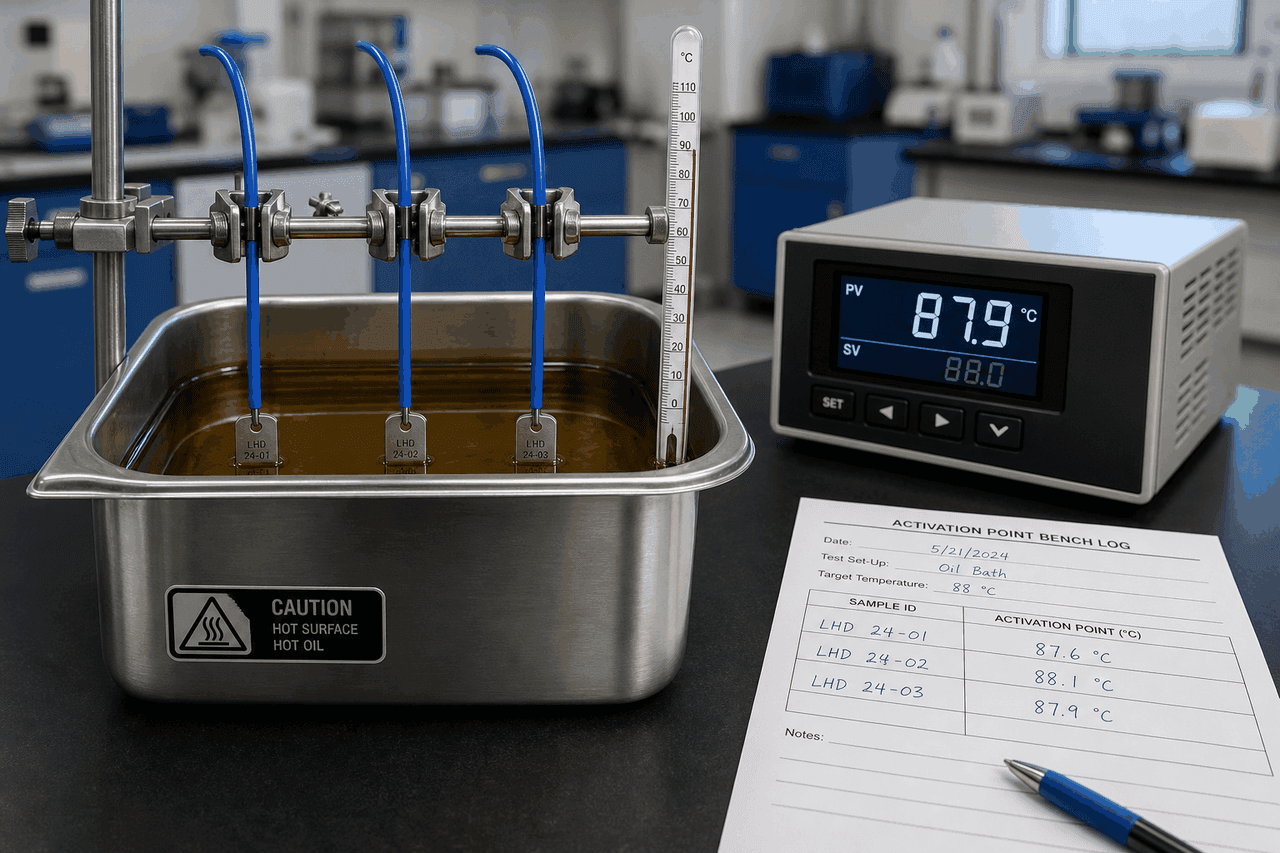
The activation temperature and the working ambient are not two values of the same thing — they are two different physical quantities that happen to share a unit. The activation temperature is an event: the point at which the thermosensitive compound changes state and the cable signals. The working ambient is a condition: the temperature the cable endures continuously without signalling. One is where it trips; the other is where it lives.
The trouble starts when both collapse onto a single line. A spec that says “120 °C cable” tells a supplier nothing usable — it could be read as a cable that activates at 120 °C, or as a cable rated to live in a 120 °C environment, and those two cables can be tens of degrees apart in their activation class. The fix is structural and costs nothing: Field 2 carries the activation temperature, Field 3 carries the working ambient, and they never share a row. The distance between them — the headroom — is the whole point, and a sheet that records only one of the two numbers has thrown the headroom away before anyone can check it.
What “Working Ambient” Actually Includes
The reason working ambient is hard to get right is that it is rarely a single steady number. A route has a baseline temperature, and then it has everything that pushes the baseline up at the worst moment. A figure that captures only the calm-day average will be exceeded — often by a wide margin — on exactly the day it matters. The honest working ambient is the highest sustained temperature the cable will see once all of the following are accounted for.
The temperature the space holds under normal operation. This is the part most people measure — and the only part a single spot reading captures.
The summer maximum, not the survey-day figure. A route measured in spring can run 15–25 K hotter under an August roof, and the cable does not get to take the summer off.
Heat from nearby motors, ducts, furnaces or hot-process streams. Air temperature a metre away can understate what the cable feels where it clips closest to the source.
Direct sun on an outdoor tray or a metal roof, and self-heating inside a closed enclosure or conduit, both add to the air figure rather than tracking it.
Short, repeated spikes — a batch process firing, a defrost cycle ending, a hot-aisle load swinging — that a once-a-day reading will usually miss.
Two figures come out of this list, not one. A continuous working ambient — the highest temperature the route holds for long stretches — and a peak-excursion figure — the short maximum it touches under the worst combination above. The cable has to live through the first without alarming and tolerate the second without damage, and a spec row that records both is the one a field engineer can actually sign.
Surveying the Route, Not the Nameplate
The single most common way the working ambient goes wrong is that it is quoted rather than measured — taken from a building nameplate, a design HVAC set-point, or a number someone remembers from a similar site. None of those is the temperature the cable will feel where it is clipped. A short survey closes the gap.
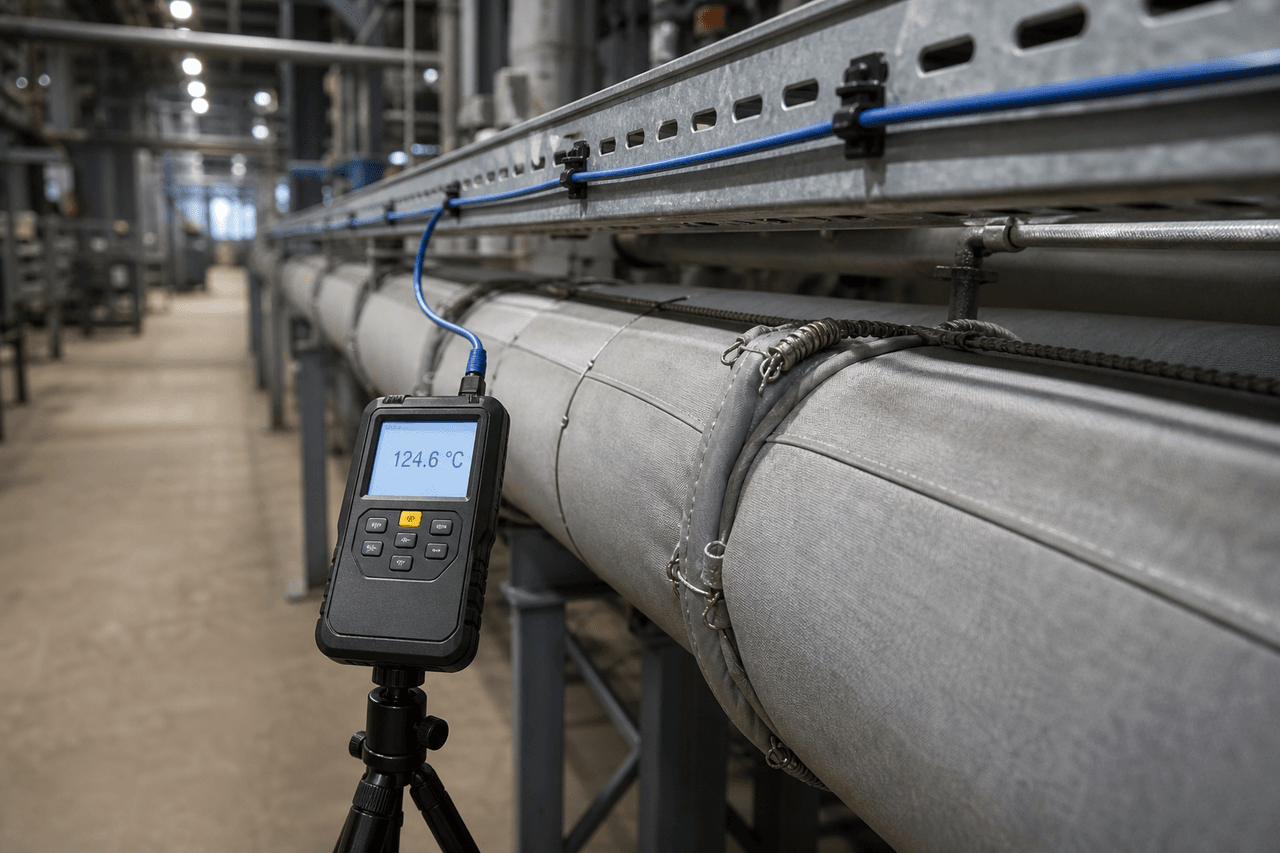
The method is unglamorous and reliable: measure near the hottest equipment on the run, at the hottest plausible condition, across a full duty cycle. A data logger left for a representative period — ideally spanning the warm part of the day and a complete process cycle — returns both the steady state and the excursions, where a single spot reading returns neither. If the survey cannot run in the hot season, the figure is adjusted upward for the known seasonal swing rather than left at the survey-day value. The output is the two numbers above: continuous and peak, each tied to where and when it was taken, so procurement is not negotiating against a figure no one can defend.
This survey is the input that activation temperature selection assumes is already done. That note walks the headroom rule — how far the activation class should sit above the working ambient, and how the tolerance band tracks that gap — and it can only do its arithmetic once this figure is honest. The order matters: settle the ambient first, then choose the class above it; never pick the class and back-fit an ambient that makes it look comfortable.
Five Routes and the Ambient They Hide
Every route has a part of its working ambient that the obvious measurement misses. The reverse-lookup below pairs five common deployments with the contributor most often under-counted in each — prompts for the survey, not contractual values.
| Deployment | Most-missed contributor | What to do about it |
|---|---|---|
| Data-center ceiling void | Hot-aisle drift | The room set-point looks comfortable, but the ceiling void above a hot aisle runs well above it, and the cable lives in the void, not at the rack inlet. Survey the void at peak IT load. |
| Warehouse under a metal roof | Summer solar gain | The floor is mild; the roofline where the cable runs bakes. A spring or winter survey can understate the August roof void by 20 K or more. Take the figure to the summer peak. |
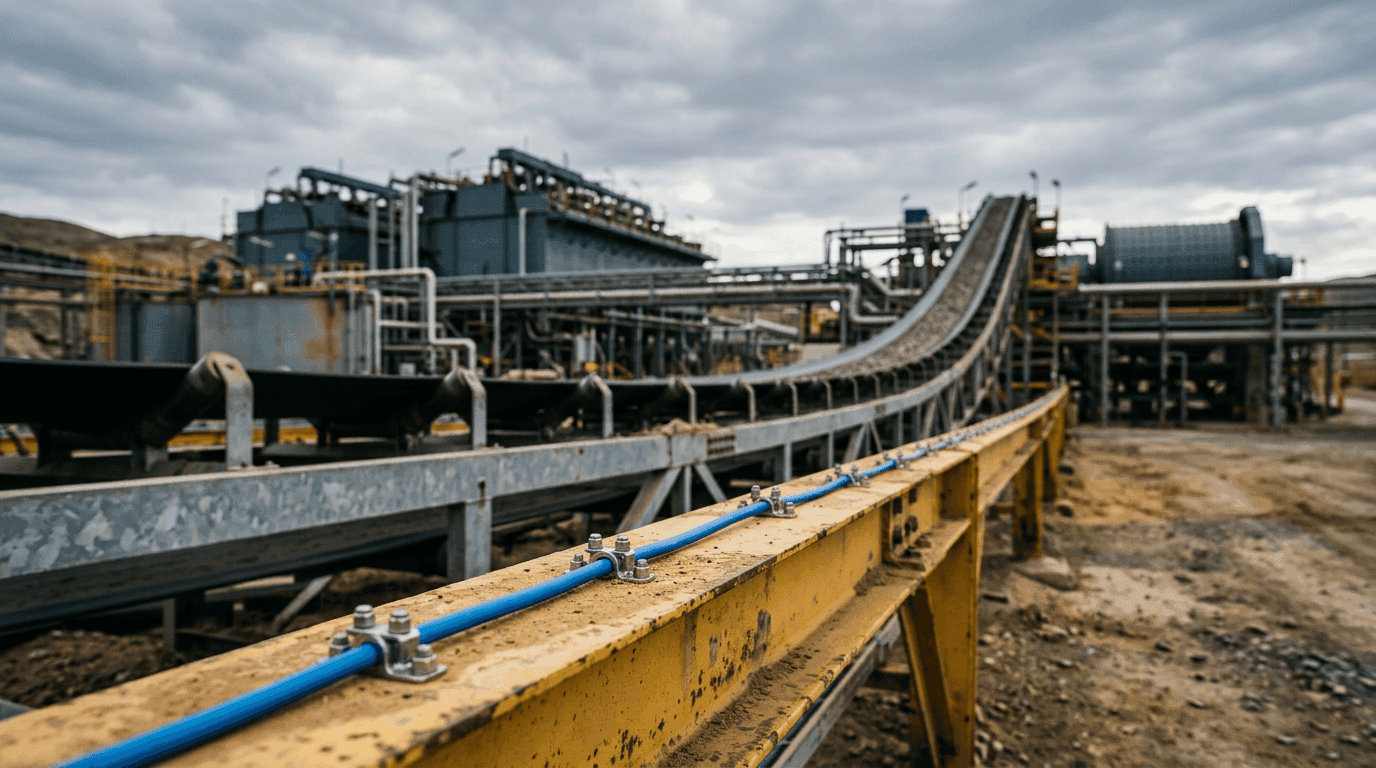
| Process plant near hot streams | Radiant load | Air temperature beside a furnace or a hot pipe understates what the cable surface reaches by radiation. Where radiance dominates, the jacket and route distance matter as much as the air figure — see the chemical and mining LHD note. |
| Cold store & refrigerated room | Defrost cycling | The steady state is cold, but defrost cycles and door-open warm-ins produce repeated upward excursions that a single cold-day reading never sees. Log across a defrost cycle. |
| Outdoor cable tray | Direct sun plus season | A shaded-tray figure and a sun-baked-tray figure are different cables. Combine the seasonal peak with direct solar exposure on the tray, not the weather-station air temperature. |
Across all five the lesson is the same: the obvious measurement is the floor, not the ceiling, of the working ambient. The survey exists to find the ceiling.
Two Ways to Get It Wrong
The working ambient has two failure directions, and they pull opposite ways — which is exactly why a padded “to be safe” number is not safe. Under-state it and the cable nuisance-alarms; over-state it and the cable responds late to a real fire. The headroom rule lives between these two errors, and the arithmetic of how far above the ambient the class should sit belongs after the ambient figure is honest.
| The error | What it does | How it shows up |
|---|---|---|
| Under-stating the ambient | The activation class is chosen too close to the temperatures the route actually reaches, so the tolerance window overlaps the ambient. | Recurring nuisance alarms on hot days or peak duty cycles, with no fire present — and a cable that passed every bench test. |
| Over-stating the ambient | The activation class is pushed too high above the real temperatures, so the trigger point sits further above an early-incident temperature than intended. | Slower response to a genuine fire; the detection margin the system was installed for is quietly eroded. |
The aim is not the highest number that feels cautious; it is the honest highest-sustained figure, with the headroom added deliberately on top of it rather than baked invisibly into a padded ambient. Once the band itself is in question — how tight the activation tolerance should be relative to that headroom — the companion note on custom activation tolerance takes it from there.
Writing the Working Ambient on the Spec Sheet
A working ambient is only as good as the row it lands on. The figure that survives a procurement and field-engineering review is the one that states both numbers, names the condition behind them, and stays on its own line — never folded into the activation temperature.
Working ambient on the route: ≤ 80 °C continuous, ≤ 95 °C peak (15-minute excursion), surveyed at the ceiling void under summer load. Activation class specified separately in Field 2 with a deliberate headroom above the continuous figure.
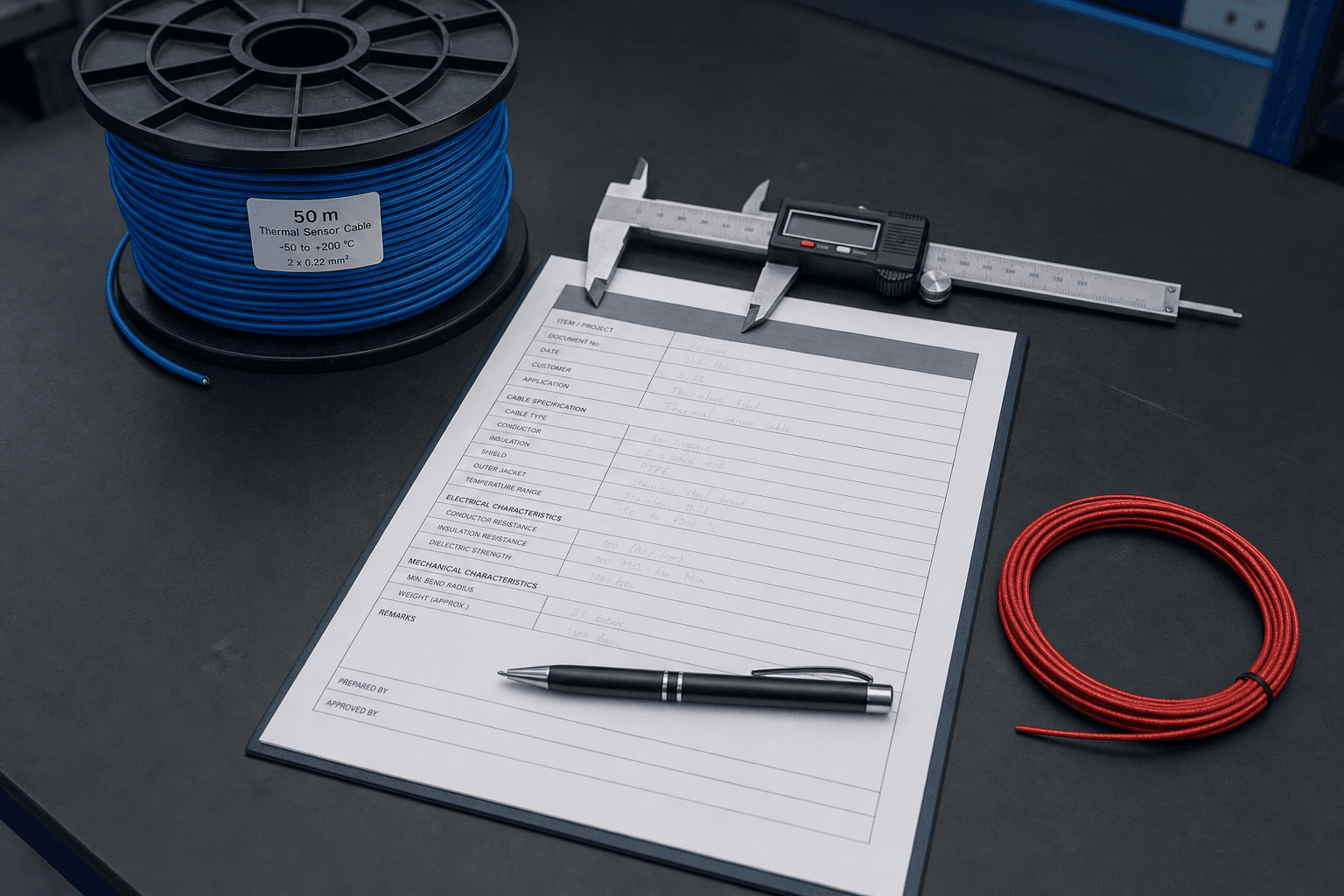
That single row does three things a vague figure cannot: it gives the supplier a defensible continuous-and-peak pair, it records where and when the number was taken, and it makes the headroom auditable by keeping the ambient visibly separate from the activation class. From there the figure flows straight into Field 4 of the RFQ template, where the working ambient sits on its own line beside the activation class, and into the twelve-field specification guide that ties the whole sheet together. The cable family the row attaches to is set out on the cable series page. And because a cable's insulation resistance is read against its temperature, the working-ambient figure is also the temperature an IR spec should be judged at — the reason the dielectric behaviour versus temperature note argues for a working-temperature megohm value over a flattering bench one.
The activation temperature is where a thermal sensor cable trips; the working ambient is where it lives. Survey the route for an honest continuous-and-peak figure, give it its own row, and add the headroom on top deliberately — so the class you chose stays quiet in normal service and still responds when it counts.
FAQ — Working Ambient vs Activation Temperature
What is the difference between working ambient temperature and activation temperature on a thermal sensor cable?
They are two different physical quantities and belong on two different rows of the spec sheet. The activation temperature is the point at which the cable triggers an alarm or cut-off; the working ambient temperature is the temperature the cable lives at, day in and day out, for the life of the installation, without triggering. A line that says only 120 °C cable is ambiguous — it could mean a cable that fires at 120 °C or one rated to sit in a 120 °C environment, and the two readings are tens of degrees apart. Field 2 of a spec sheet is the activation temperature; Field 3 is the working ambient; and the gap between them, the headroom, is what keeps the cable quiet in normal service.
How do I determine the working ambient temperature for a thermal sensor cable route?
Survey the route rather than quoting a nameplate figure. The working ambient is the highest sustained temperature the cable will actually see, which means measuring near the hottest equipment on the run, at the hottest plausible condition — peak season, peak duty cycle, peak time of day — not once on a mild afternoon away from the heat sources. A short data-logging run across a full duty cycle catches the steady state plus the excursions; a single spot reading usually misses both the seasonal peak and the thermal drift from adjacent equipment. Record a continuous figure and a peak-excursion figure, because the cable has to live through the first without alarming and tolerate the second without damage.
Why does a thermal sensor cable that passes a bench test still nuisance-alarm in the field?
Because the bench is not the route. A bench test confirms the cable triggers at its rated activation point under controlled conditions; it says nothing about the environment the cable was later installed into. If the working ambient on that route — including summer peaks, solar gain on a roof, hot-aisle drift or radiance from nearby equipment — climbs closer to the activation class than the spec assumed, the tolerance window starts to overlap the ambient and the cable alarms with no fire present. The cable did exactly what it was built to do; the working-ambient figure behind the class selection was the part that was wrong.
What happens if I over-state the working ambient to be safe?
Over-stating the ambient is the opposite error to under-stating it, and it is just as real. If a buyer pads the working-ambient figure and then picks an activation class well above it, the cable becomes slower to respond to a genuine fire, because the trigger point now sits further above the temperatures the route reaches in an early incident. Under-stating the ambient causes nuisance alarms; over-stating it erodes the detection margin the system was installed for. The aim is an honest highest-sustained figure with a deliberate headroom on top, not a padded number that quietly trades away response.