Every lifecycle-cost spreadsheet for fire detection in inaccessible infrastructure eventually reaches the same conclusion — the installed-equipment line is small, the maintenance-labour line is enormous, and the downtime-avoidance line dominates everything. This note walks through the numbers, the topology choice and the specification discipline that turn "set it and forget it" from a marketing tagline into a defensible 20-year commitment.
The Infrastructure Paradox
The assets that most need fire detection are often the ones humans visit least: cable tunnels running 30 m below a turbine hall, conveyor galleries in deep mine workings, utility decks inside bridge spans, cold stores at -25°C. The standard assumption of "a technician will return every 6–12 months to clean, test, recalibrate" breaks against the geometry of the asset itself. It does not matter how well specified the point detector is if nobody will actually return to maintain it.
Conventional Detection — What the TCO Actually Looks Like
Point-type detection was built around accessible ceilings. Applied to inaccessible assets, the maintenance line on the spreadsheet climbs fast:
- Access engineering. Confined-space permits, scaffolding, rope-access teams, spotters. A 10-minute sensor test becomes an 8-hour operation.
- Production impact. Many critical assets (power plants, transit tunnels, data halls) cannot be taken offline for routine detection work without measurable revenue loss.
- Inspection drift. When access is expensive, inspections slip. The detection system is nominally intact but the evidence trail is gone.
- Cumulative labour. Across a 20-year asset life, point-detector maintenance in difficult geometry can outspend the original equipment CAPEX several times over — the harder the access, the larger the multiple.
Why a Fusible LHD Cable Changes the Economics
A fusible thermosensitive cable is one of three linear heat detection architectures — and the only one that is a passive dielectric stack with zero electronics along the sensing length. The economic implications flow from that one fact:
No Power, No Electronics in the Inaccessible Zone
The powered component is the panel card, which lives in an accessible control room. Everything in the inaccessible zone is passive. No battery replacements, no firmware, no driver electronics to age-out.
No Calibration Drift
The activation event is a physical phase transition in the thermosensitive compound. There is nothing to recalibrate. A cable that passed its factory QC will hold the same activation window for its service life, limited only by jacket and compound ageing.
Continuous Coverage Along the Run
A single cable run senses continuously along its full length. Covering the same linear route with point detectors instead means a spacing grid of discrete devices, each of which has to be reached to test and clean — the coverage-geometry difference at the heart of choosing linear heat detection over spot / point detectors. For linear hazards (trays, conveyors, tunnel crowns) that difference is often dispositive.
Engineered for the Environment
Jacket chemistry (LSZH, silicone, fluoropolymer, armoured variants) is selected for the installed environment. A correctly specified cable is not "surviving in spite of" the tunnel — it was designed for it.
Where "Install Once" Pays Back the Hardest
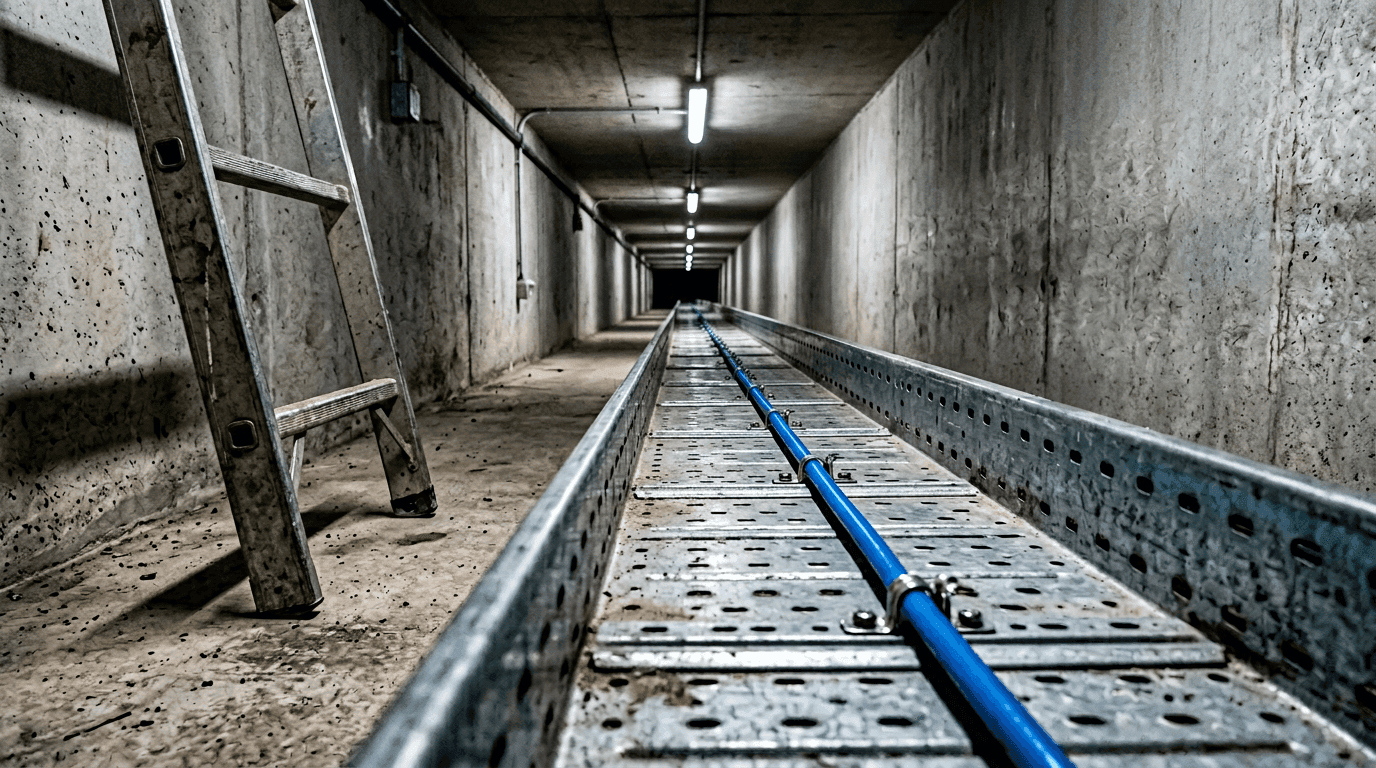
Cable Tunnels & Trays
Cable fires carry both fuel and ignition. LHD cable mounted above the cable bundle provides zone-level detection tied directly to the panel. No local power, and far less routine in-field access than a grid of individually serviced heads.
Road & Rail Tunnels
HGV fires exceed 1,300°C in minutes. Traffic cannot stop for sensor checks. A continuous LHD run mounted at the crown covers kilometres and triggers ventilation and deluge sequences on a zone basis.
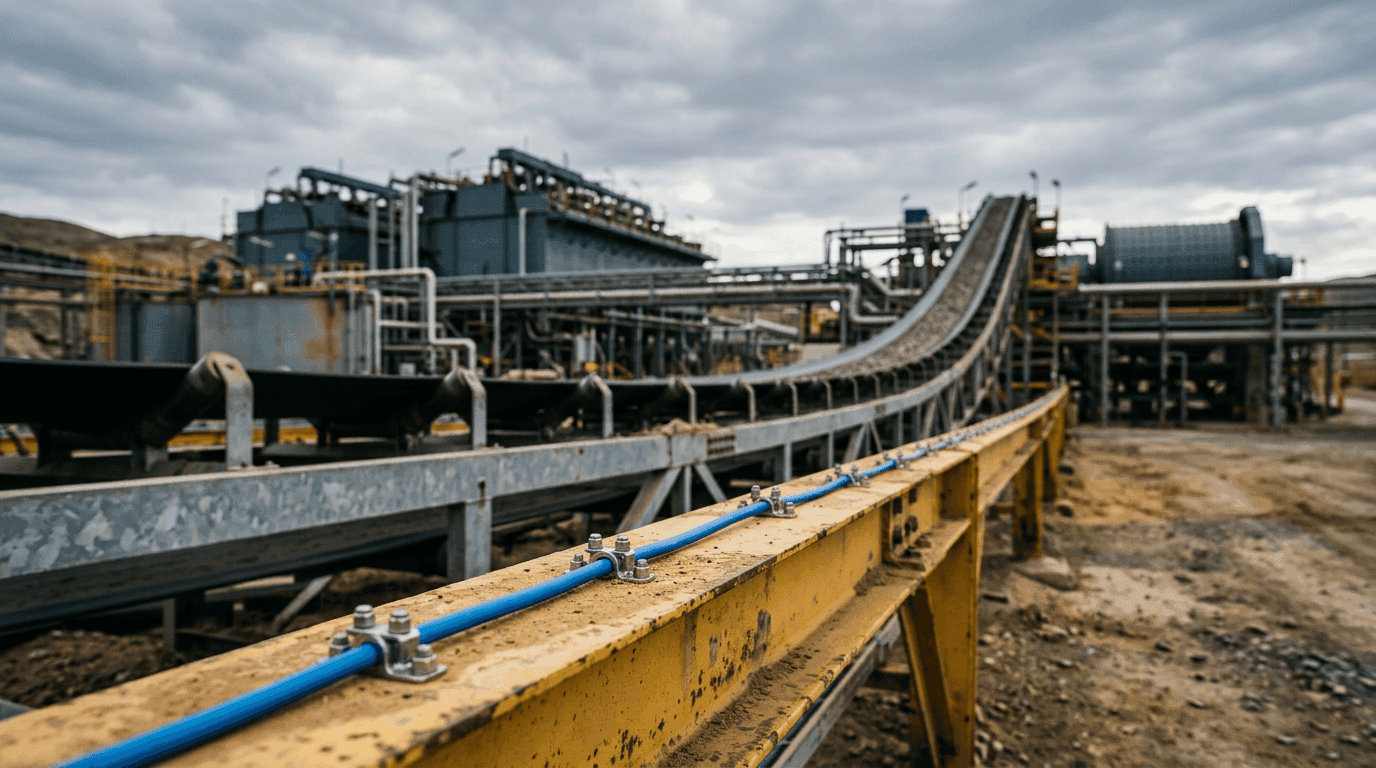
Conveyor Galleries (Mining & Bulk Handling)
Conveyor belt fires propagate at walking pace through underground workings. LHD strung along the belt provides detection that keeps working between scheduled shutdowns — which in mining can be months apart.
Bridge Decks & Utility Corridors
Utility cables, gas pipelines and telecoms bundles riding across bridge decks need protection without rope-access maintenance. LHD installed in the structural void alongside the utilities needs little ongoing touch beyond scheduled functional testing.
Cold Storage & High-Bay Warehouses
Detector stratification is a chronic problem in high ceilings; access in cold stores is punitive. LHD threaded through racking catches hotspots at the point of origin, and fusible thermosensitive cable is unaffected by cold-aisle operation.
| Asset | Access Difficulty | Point-Detector Cadence | LHD Advantage |
|---|---|---|---|
| Cable tunnels | Very high | 6–12 months | Minimal in-field access |
| Road / rail tunnels | High | 3–6 months | Km-scale continuous coverage |
| Conveyor galleries | High | 6 months | Works between shutdowns |
| Bridge decks | Very high | 12 months | Install once, monitor from control room |
| Cold storage | Medium–high | 6–12 months | No drift in sub-zero operation |
The 20-Year Lifecycle Spreadsheet
Most procurement meetings miss the real number. Here is the comparison our engineering desk walks integrators through when they are specifying for a 20-year asset:
- CAPEX — equipment. LHD is 20–40% cheaper per linear metre of coverage than a comparable point-detector array.
- CAPEX — install labour. One cable run replaces dozens of junction boxes, back-boxes and power feeds. Typical install-hour reduction: 50–70%.
- OPEX — routine maintenance. For a 20-year period, near-zero maintenance access alone saves 60–80% of the point-detector OPEX line.
- OPEX — downtime avoidance. In production-critical environments (tunnels, data halls, mining conveyors) avoided shutdown is often the dominant line on the whole spreadsheet, larger than CAPEX and OPEX combined.
For an inaccessible asset, the real question is not "can we afford LHD?" but "can we afford the maintenance bill of anything else across 20 years?" The arithmetic usually points one direction.
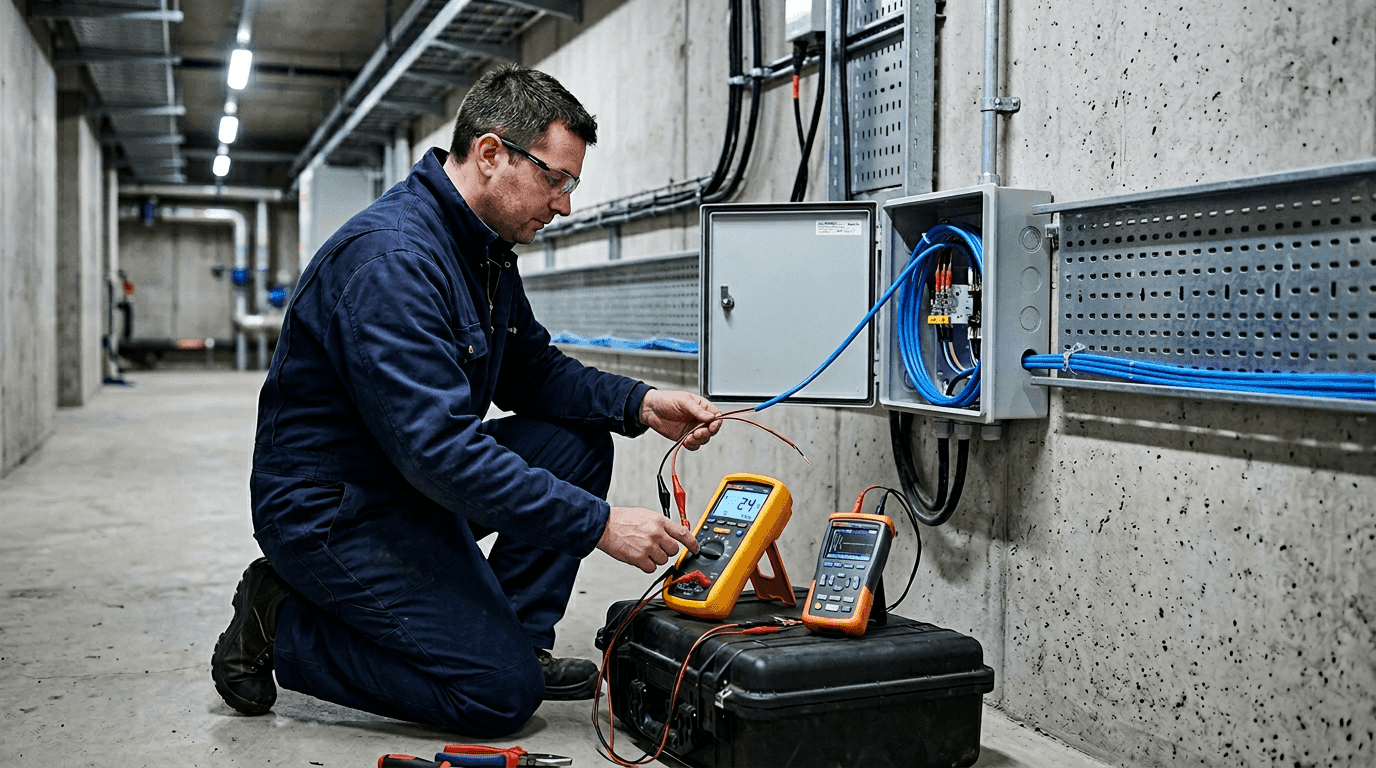
Two honest caveats keep that argument defensible. LHD does not remove the code-required periodic functional test — the panel, terminations and end-of-line still get checked to your NFPA 72 or EN inspection schedule; what it removes is the per-device access that dominates a point grid. And because fusible cable is non-resettable, a genuine activation means reaching and replacing the affected length once, so even a sealed run is worth designing with that single access event in mind.
Specification Discipline for Install-Once Assets
LHD cable earns its install-once status only if it is specified properly. The four spec clauses that matter most for inaccessible-asset service:
Activation Temperature Matched to the Ambient
Ambient ceiling temperature sets the nuisance margin. A warm tunnel with 45°C summer crown temperature wants a 105°C or higher activation class. A cold store tolerates 68°C. Pick with ambient in mind, not catalogue default.
Jacket Chemistry Matched to the Environment
- LSZH for tunnels and public-facing infrastructure (smoke-toxicity codes).
- Fluoropolymer for chemical and salt environments.
- Silicone for high-radiant-heat motor rooms and turbine halls.
- Steel armour or stainless overbraid where rodent or impact damage is credible.
Chemical-plant and mining-service routes have additional jacket and routing constraints — see our dedicated note on specifying LHD cable for chemical and mining plants.
IP Rating Across the Whole Loop
The cable is IP67 only if every junction box on the loop is also IP67. The loop rating equals the rating of its weakest enclosure. Do not cheap-out on the JB.
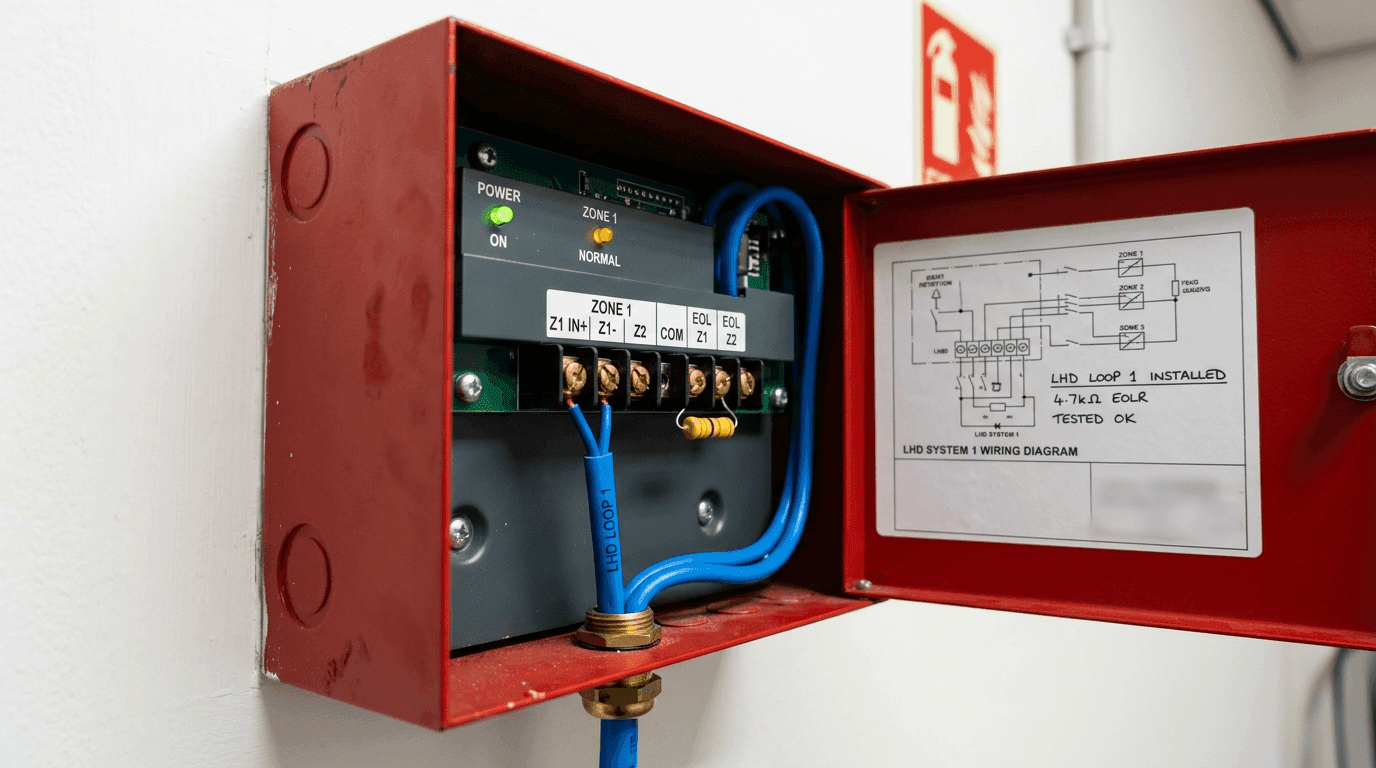
Continuous Circuit Supervision
Terminate into a panel card that continuously monitors end-of-line resistance. That supervision is what converts the cable from an install-once sensor into an install-once sensor with a verifiable health status visible at the control-room panel. Where the cable sits on a fire-protection panel drawing walks through the wiring side of that supervision.
Install-Once Routing Discipline
- Mount directly above the hazard (tray crown, conveyor centreline, tunnel apex) — heat rises and the cable must see it.
- Stainless-steel clips every 1–2 m; heat-resistant cable ties only where stainless is not appropriate.
- All splices inside IP65 or better junction boxes; splices out of the weather and out of the dust.
- Terminate in a supervised panel card — silent failures are the most expensive failure mode.
- Record the cable route in as-built drawings with lot numbers per zone — responders and auditors will need it.
If a supervised loop ever drops into alarm and the cause is ambiguous, our field workflow for diagnosing an LHD cable short circuit without cutting cable is the next reference point — particularly relevant when the loop is buried in inaccessible infrastructure and a wrong call means an expensive access permit.
FAQ — LHD on Inaccessible Assets
Why is LHD cable preferred over point detectors in inaccessible infrastructure?
Tunnels, cable galleries, conveyor enclosures, bridge cavities and under-floor data-center voids share three problems for point detectors: hundreds of units would be needed to cover the run, accessing each one for periodic testing and replacement is dangerous or expensive, and ambient conditions (dust, vibration, condensate) derate sensitive electronic sensors. A single fusible LHD loop replaces much of that array along the linear route, has no in-field electronics to fail, and only requires intervention when there is an actual event — which is exactly what "inaccessible" demands.
What is the realistic service life of an LHD cable in a tunnel or cable gallery?
An LHD cable specified for the environment typically delivers 20–25 years of service life with no scheduled replacement. The thermosensitive compound is dimensionally stable below the activation point; the jacket is the actual life-limiting layer, and a correctly specified jacket (LSZH for tunnels, fluoropolymer for chemical exposure, UV-stabilised for outdoor) outlives most concrete-structure overhauls. The lot number printed on the jacket is the traceability tag back to the per-batch QC report, which is what AHJs ask for at the 10-year inspection.
How does the 20-year TCO of LHD cable compare to point-detector arrays?
Point-detector arrays are cheap to install per unit, but the 20-year cost is dominated by periodic testing labour, replacement (electronic sensors typically need refresh at 8–12 years), and access scaffolding/lifts in tall or buried spaces. LHD cable carries a higher up-front cable cost but near-zero scheduled maintenance and one panel-level supervisory loop instead of hundreds of addressable nodes. In a typical tunnel or cable gallery, 20-year TCO favours LHD by 40–60%, and the gap widens further when access cost rises (offshore platforms, underground structures, hazardous areas).
What should I check on an LHD specification for inaccessible infrastructure?
Five must-have specification items: jacket chemistry matched to the environment (LSZH for tunnels, fluoropolymer for chemical, UV-stabilised for outdoor); IP67 ingress protection minimum, plus an internal 24-hour static-immersion soak as an additional factory check beyond IEC 60529 IPx7; tensile strength >2 kg to survive cable-tray pulls and long unsupported spans; activation tolerance band tight enough to avoid nuisance trips at the highest legitimate ambient (typically ±15 K standard, ±5 K tight); and per-batch QC report keyed to the lot number — without that report, the cable is uninspectable at the 10-year mark.
If you are specifying LHD for a tunnel, conveyor, bridge or cold-store project, send us the asset profile and we will return a draft spec sheet, jacket selection and 20-year TCO sketch — turnaround scheduled subject to project scope and engineering review. Start a conversation.